
Contents
Home Care Supplies Checklist – What to Have Ready Before Care Starts – Free Printable PDF
A free printable preparation guide for families and caregivers – organized by category so the first day of home care goes smoothly from the start. PDF and editable Word doc included.
Download or Print the Home Care Supplies Checklist
Most families focus on finding the right caregiver. Far fewer think about what the caregiver will need when they walk through the door on Day 1. Missing supplies do not just cause inconvenience – they split the caregiver’s attention, undermine the client’s confidence in the new arrangement, and create avoidable safety risks before the routine has even had a chance to establish itself.
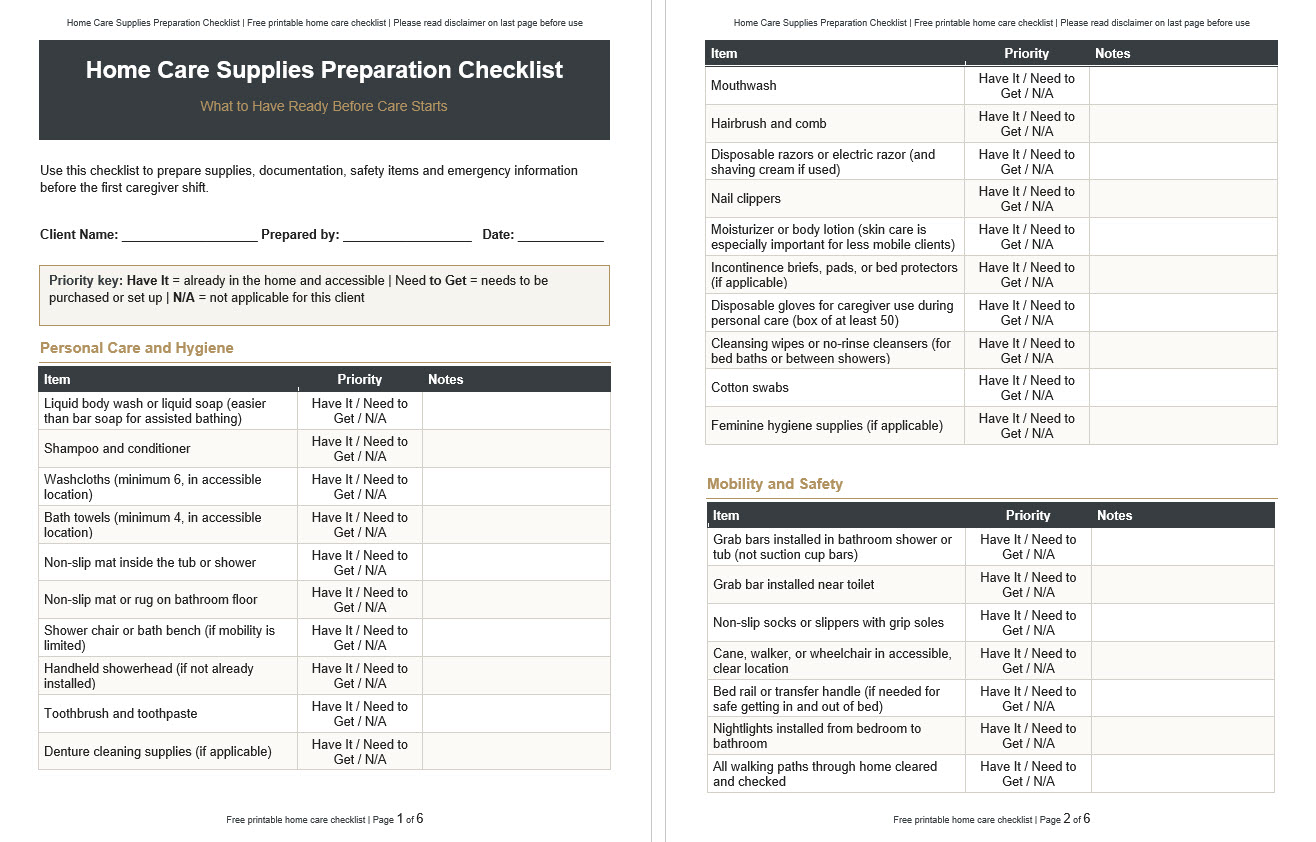
This checklist covers every category a caregiver needs to be ready from the first shift: personal care and hygiene, mobility and safety, medication management, nutrition and kitchen, documentation and communication, and emergency preparedness. Each item includes a three-column priority marker so you can triage what you already have, what still needs to be purchased, and what does not apply.
It is designed for families preparing for a loved one’s first day of professional home care, anyone coordinating a transition from hospital to home, and caregivers doing a pre-shift readiness check before care begins.
Tip: Do not wait until the night before. Go through this checklist at least three to five days before the first shift so there is time to order or purchase anything missing without a rush.
The free printable PDF or editable Doc are available for download by clicking the buttons below.
The first day of professional home care is a lot of things at once. It is the beginning of a relationship between a caregiver and a client who are meeting for the first time. It is a transition that carries emotional weight for the family and for the person receiving care. It is the start of a new routine that will need to establish itself over the coming days and weeks.
What it should not be is a scramble for supplies.
Running out of incontinence products at 11pm. Discovering there is no shower chair the first time a caregiver tries to help with bathing. Not being able to find the medication list when the caregiver arrives and needs to reference it. These are the kinds of first-day friction points that undermine confidence, create unnecessary stress, and make the transition to home care harder than it needs to be.
This checklist helps families get the home care-ready before the first shift begins. It covers every category of supplies a professional caregiver needs to do their job safely and effectively, from personal care items and mobility aids to documentation, emergency preparedness, and the information documents that are just as important as any physical supply.
Use the priority column to mark each item as Have It, Need to Get, or Not Applicable. Use the notes field to record brand preferences, quantities, or anything worth communicating to the caregiver or agency before Day 1.
The free printable PDF and editable Doc are available for download by clicking the buttons above.
In-home care support across Los Angeles and Orange County by CARE Homecare
A checklist tells you what to have ready. A trained caregiver shows up prepared to use it, every shift, from Day 1. CARE Homecare provides flexible non-medical in-home care throughout Los Angeles and Orange County, with a care planning process that gets the home ready before the first shift and keeps it running smoothly long after.

Why Home Preparation Matters Before Care Starts
The first few days of professional home care are among the most consequential. They set the tone for the caregiver-client relationship, establish the daily routine, and communicate to the person receiving care whether this new arrangement is going to feel safe and respectful or disorganized and stressful.
When supplies are organized, the home is prepared, and all relevant information is accessible, the caregiver can walk in and focus entirely on the person in their care. They are not hunting for a washcloth, asking where the medications are kept, or managing a client’s anxiety about a situation that feels chaotic.
When supplies are missing or disorganized, the opposite happens. The caregiver’s attention is split. The client’s trust in the arrangement is undermined before it has had a chance to develop. Family members who worked hard to set care up feel like the system is already failing.
Preparation also prevents safety incidents. A caregiver who cannot find a non-slip bath mat may improvise in a way that creates fall risk. A caregiver who does not have a printed medication list may make an error or delay a reminder. A caregiver who does not know where the emergency contacts are posted cannot respond quickly when something happens.
The investment of one or two hours getting the home care-ready before the first shift starts pays dividends for weeks.

Before the First Shift – Documents and Information Every Caregiver Needs
Physical supplies get most of the attention in home care preparation. But the information a caregiver needs on their first shift is equally critical, and it is the category families most often overlook.
Every caregiver should have access to the following before their first shift begins. The easiest approach is to compile everything into a single binder or folder, kept at the care station or a designated visible location in the home.
Medication list. A printed list of every medication the client takes, including the medication name, dosage, timing, prescribing physician, and the reason it is prescribed. This list should be kept current and updated whenever there is a change. Non-medical caregivers do not administer medications, but they provide reminders and need to know what they are reminding the client to take, when, and with what (food, water, or other instructions).
Allergy list. Food allergies, medication allergies, and any environmental sensitivities (latex, certain fragrances, specific cleaning products). This should be posted visibly, not just in the binder.
Emergency contacts. Primary family contact, secondary family contact, the client’s physician and specialist, the pharmacy, the home care agency’s after-hours line, and any neighbors or friends with a key to the home. These should be printed and posted visibly, not stored only in a phone.
Advance directives. Any Do Not Resuscitate (DNR) order, healthcare proxy designation, or living will, and clear documentation of where the originals are kept. The caregiver does not need to make decisions based on these documents, but they need to know they exist and where to find them.
Health insurance information. Medicare or Medicaid card, supplemental insurance card, long-term care insurance policy number if applicable.
Discharge instructions. If the client is returning from a hospitalization or rehabilitation facility, the discharge instructions from the treating team should be accessible and reviewed with the caregiver and the family.
Home access information. Door codes, gate codes, alarm codes, where spare keys are kept, and any quirks of the home the caregiver needs to know.
Wi-Fi password. If the caregiver uses a documentation app or a care coordination platform to log their shift, they will need access to the network.
Client preferences and routines. A brief written summary of the client’s preferred daily schedule, their likes and dislikes, important personal history a caregiver should know (preferred name, meaningful relationships, hobbies, sensitive topics to avoid), and any behavioral patterns relevant to care. This is especially important for clients with dementia.

Home Care Supplies Preparation Checklist
Client Name: _________ Prepared by: _________ Date: _________
Priority key: Have It = already in the home and accessible | Need to Get = needs to be purchased or set up | N/A = not applicable for this client
Personal Care and Hygiene
| Item | Priority | Notes |
| Liquid body wash or liquid soap (easier than bar soap for assisted bathing) | Have It / Need to Get / N/A | |
| Shampoo and conditioner | Have It / Need to Get / N/A | |
| Washcloths (minimum 6, in accessible location) | Have It / Need to Get / N/A | |
| Bath towels (minimum 4, in accessible location) | Have It / Need to Get / N/A | |
| Non-slip mat inside the tub or shower | Have It / Need to Get / N/A | |
| Non-slip mat or rug on bathroom floor | Have It / Need to Get / N/A | |
| Shower chair or bath bench (if mobility is limited) | Have It / Need to Get / N/A | |
| Handheld showerhead (if not already installed) | Have It / Need to Get / N/A | |
| Toothbrush and toothpaste | Have It / Need to Get / N/A | |
| Denture cleaning supplies (if applicable) | Have It / Need to Get / N/A | |
| Mouthwash | Have It / Need to Get / N/A | |
| Hairbrush and comb | Have It / Need to Get / N/A | |
| Disposable razors or electric razor (and shaving cream if used) | Have It / Need to Get / N/A | |
| Nail clippers | Have It / Need to Get / N/A | |
| Moisturizer or body lotion (skin care is especially important for less mobile clients) | Have It / Need to Get / N/A | |
| Incontinence briefs, pads, or bed protectors (if applicable) | Have It / Need to Get / N/A | |
| Disposable gloves for caregiver use during personal care (box of at least 50) | Have It / Need to Get / N/A | |
| Cleansing wipes or no-rinse cleansers (for bed baths or between showers) | Have It / Need to Get / N/A | |
| Cotton swabs | Have It / Need to Get / N/A | |
| Feminine hygiene supplies (if applicable) | Have It / Need to Get / N/A |
Mobility and Safety
| Item | Priority | Notes |
| Grab bars installed in bathroom shower or tub (not suction cup bars) | Have It / Need to Get / N/A | |
| Grab bar installed near toilet | Have It / Need to Get / N/A | |
| Non-slip socks or slippers with grip soles | Have It / Need to Get / N/A | |
| Cane, walker, or wheelchair in accessible, clear location | Have It / Need to Get / N/A | |
| Bed rail or transfer handle (if needed for safe getting in and out of bed) | Have It / Need to Get / N/A | |
| Nightlights installed from bedroom to bathroom | Have It / Need to Get / N/A | |
| All walking paths through home cleared and checked | Have It / Need to Get / N/A | |
| Raised toilet seat or toilet safety frame (if rising from toilet is difficult) | Have It / Need to Get / N/A | |
| Long-handled reacher or grabber | Have It / Need to Get / N/A | |
| Personal emergency response system (PERS) or medical alert device, charged and ready to be worn | Have It / Need to Get / N/A |
Medication Management
| Item | Priority | Notes |
| Weekly pill organizer labeled with days and times | Have It / Need to Get / N/A | |
| All current prescriptions filled and adequately stocked | Have It / Need to Get / N/A | |
| Printed medication list posted visibly in the home | Have It / Need to Get / N/A | |
| Over-the-counter medications in a designated, labeled location | Have It / Need to Get / N/A | |
| Pharmacy delivery set up (recommended for ongoing supply management) | Have It / Need to Get / N/A |
Note on medication reminders: Non-medical home caregivers provide medication reminders, not medication administration. They prompt the client to take their medication at the scheduled time and log that it was taken. Any medication management beyond this scope requires a licensed home health provider. Confirm scope with your agency before care begins. Pharmacy home delivery availability may also vary depending on the client’s Medicare Part D plan, verify with the specific insurer or pharmacy before setting up automatic delivery.
Nutrition and Kitchen
| Item | Priority | Notes |
| Easy-to-prepare foods stocked for the first several days | Have It / Need to Get / N/A | |
| Foods aligned with any dietary restrictions or preferences noted | Have It / Need to Get / N/A | |
| Dietary supplements prescribed (protein powder, fiber, etc.) | Have It / Need to Get / N/A | |
| Liquid nutritional supplements if prescribed (Ensure, Boost, etc.) | Have It / Need to Get / N/A | |
| Large-handle or adaptive utensils (if grip strength or dexterity is limited) | Have It / Need to Get / N/A | |
| Non-slip placemat or bowl holder | Have It / Need to Get / N/A | |
| Insulated water bottle or large cup with lid and straw for hydration | Have It / Need to Get / N/A | |
| Grocery delivery service set up or grocery list prepared | Have It / Need to Get / N/A |
Documentation and Communication
| Item | Priority | Notes |
| Caregiver log binder or notebook at care station | Have It / Need to Get / N/A | |
| Shift note forms or daily care log sheets (printed or digital) | Have It / Need to Get / N/A | |
| Calendar posted in common area showing upcoming appointments | Have It / Need to Get / N/A | |
| Communication board or whiteboard (especially helpful for dementia) | Have It / Need to Get / N/A | |
| Care coordination app or family update system set up (if using one) | Have It / Need to Get / N/A | |
| Wi-Fi password written down and accessible to caregiver | Have It / Need to Get / N/A |
Emergency Preparedness
| Item | Priority | Notes |
| Emergency contact list printed and posted visibly in the home | Have It / Need to Get / N/A | |
| Personal emergency response system (PERS) or medical alert device, charged and caregiver knows how it works | Have It / Need to Get / N/A | |
| First aid kit in an accessible, clearly labeled location | Have It / Need to Get / N/A | |
| Fire extinguisher in kitchen, checked and within service date | Have It / Need to Get / N/A | |
| Smoke detectors tested on every floor | Have It / Need to Get / N/A | |
| Carbon monoxide detector installed and functioning | Have It / Need to Get / N/A | |
| Emergency exit plan known to caregiver | Have It / Need to Get / N/A | |
| Spare key arrangements made (caregiver, neighbor, or lockbox) | Have It / Need to Get / N/A |
Items still needed before Day 1:
____________________________________________________________
____________________________________________________________
Notes for caregiver or agency:
____________________________________________________________
Prepared by: _________ Date: _________ Reviewed with caregiver: ☐ Yes ☐ No

Setting Up a Care Station
One of the most practical things a family can do before care begins is designate a specific area of the home as the care station. This does not need to be elaborate. A side table in the bedroom, a small cart in the living room, or a dedicated section of a kitchen counter all work.
The care station is where the essential documents and supplies live: the medication organizer, the care log binder, the emergency contact list, the allergy information, and any supplies the caregiver needs to reference or access quickly. A dedicated care station means that any caregiver walking in for the first time knows exactly where to find what they need without asking, searching, or improvising.
A well-organized care station also signals to the client that things are under control, which is important in the early days of a care relationship when trust is still being established.
What belongs at the care station: the medication list and weekly pill organizer, the care log or shift notes binder, the emergency contact list, the allergy list, the client’s daily schedule and preferences summary, and any frequently used personal care supplies. Cleaning supplies and personal care items used only during specific tasks (bathing supplies, for example) can be kept in their natural location rather than at the care station.

How to Stock for Ongoing Care
Getting the home care-ready before Day 1 is the starting line. Keeping it care-ready over the weeks and months that follow requires a system.
A monthly supply review prevents the most common disruption in home care: running out of something essential at an inconvenient moment. Set a recurring date each month to check stock levels on incontinence supplies, personal care items, medications, and caregiver supplies like disposable gloves and cleansing wipes.
Where possible, set up automatic delivery or subscription services to remove the monthly review from the to-do list entirely. Most pharmacies offer home delivery and automatic refill programs for maintenance medications, though availability depends on the client’s Medicare Part D plan, verify with the specific plan before setting up automatic delivery. Incontinence supplies, disposable gloves, and other disposable personal care items are widely available through subscription delivery programs on a set schedule. The goal is removing as many single-use supply decisions as possible from the caregiver’s and family’s mental load.
For a full breakdown of what non-medical caregivers cover during a shift, including how they use these supplies within the context of daily care tasks, see our free printable caregiver daily checklist for elderly adults.

How CARE Homecare Helps Families Prepare
When families work with CARE Homecare, home preparation is part of the intake and care planning process. Before the first shift begins, we walk families through what the home needs to have in place, what information the caregiver will need access to, and how to organize the care station so that Day 1 goes as smoothly as possible.
We also coordinate with hospital discharge planners, physicians, and family members to ensure that the care plan reflects the client’s actual needs and that the home environment supports those needs from the start.
The goal is a first day that feels organized, calm, and reassuring – for the client, for the family, and for the caregiver who is walking in to begin what we hope will be a long and trusting care relationship.
In-home care support across Los Angeles and Orange County by CARE Homecare
A well-prepared home sets the stage. A trained, consistent caregiver makes it work day after day. CARE Homecare provides flexible non-medical in-home care throughout Los Angeles and Orange County, with a care planning process that starts before the first shift, covering everything from home setup to caregiver matching to documentation systems that keep the whole care team aligned.
If you are preparing for a loved one’s first day of home care or coordinating a transition from hospital to home, see our post-hospital home care services or contact us for a free 15-minute consultation to talk through what needs to be in place before care begins.
Call (323) 851-1422 Email: info@carehomecare.com

Sources
- National Institute on Aging. “Caregiver Worksheets.” NIH.gov. Updated January 2026. https://www.nia.nih.gov/health/caregiving/caregiver-worksheets
- AARP and National Alliance for Caregiving. Caregiving in the US 2025. Washington, DC: AARP, July 24, 2025. https://www.aarp.org/pri/topics/ltss/family-caregiving/caregiving-in-the-us-2025/
- AARP. “A Caregiver’s Guide to Building an Expert-Approved Home Medical Kit.” December 2024. https://www.aarp.org/caregiving/home-care/home-medical-kit/
- California Department of Social Services. Home Care Services Branch. “Home Care Services Consumer Protection Act.” Accessed May 2026. https://www.cdss.ca.gov/inforesources/community-care/home-care-services
- Centers for Medicare & Medicaid Services. “What’s Medicare Drug Coverage (Part D)?” Medicare.gov. https://www.medicare.gov/health-drug-plans/part-d
Related Resources
- Hospital Discharge Checklist | Everything families need to prepare for a safe transition home from the hospital
- A Family Guide to Home Care After Hospital Discharge | A complete guide to the post-hospital transition
- Home Safety Checklist for Seniors | Identify and address fall hazards and home safety risks before care begins
- Light Housekeeping Checklist for Caregivers | What household tasks fall within non-medical caregiver scope
- How to Choose a Home Care Agency | A complete guide to evaluating home care agencies before you hire
- Free Printable Caregiver Daily Checklist for Elderly | How caregivers use these supplies within the structure of a daily care shift
Disclaimer: The information on this page is intended for general educational purposes only and does not constitute medical, legal, or professional care advice. The home care supplies checklist provided here is a general preparation guide and should be adapted based on the specific needs of the individual receiving care, in consultation with their physician, licensed healthcare provider, or home care agency. CARE Homecare provides non-medical home care services only. If you have concerns about a loved one’s health, safety, or care needs, please consult a qualified care professional.
 https://carehomecare.com/wp-content/uploads/2026/05/Post-Surgery-Home-Care-Checklist-Non-Medical-Support-for-Recovery-at-Home-Free-PDF-and-Word-Download.jpg
839
1315
Moti Gamburd
https://a81019caredemo.wpengine.com/wp-content/uploads/2019/08/CARE-Homecare-Logo-wht.png
Moti Gamburd2026-05-14 20:03:392026-05-14 20:03:39Free Post-Surgery Home Care Checklist | Non-Medical Support for Recovery at Home | PDF or Word Print or Download
https://carehomecare.com/wp-content/uploads/2026/05/Post-Surgery-Home-Care-Checklist-Non-Medical-Support-for-Recovery-at-Home-Free-PDF-and-Word-Download.jpg
839
1315
Moti Gamburd
https://a81019caredemo.wpengine.com/wp-content/uploads/2019/08/CARE-Homecare-Logo-wht.png
Moti Gamburd2026-05-14 20:03:392026-05-14 20:03:39Free Post-Surgery Home Care Checklist | Non-Medical Support for Recovery at Home | PDF or Word Print or Download https://carehomecare.com/wp-content/uploads/2026/05/Home-Care-Supplies-Preparation-Checklist.jpg
842
1316
Moti Gamburd
https://a81019caredemo.wpengine.com/wp-content/uploads/2019/08/CARE-Homecare-Logo-wht.png
Moti Gamburd2026-05-14 18:49:452026-05-14 18:49:45Home Care Supplies Checklist | What to Have Ready Before Care Starts | Free Printable PDF
https://carehomecare.com/wp-content/uploads/2026/05/Home-Care-Supplies-Preparation-Checklist.jpg
842
1316
Moti Gamburd
https://a81019caredemo.wpengine.com/wp-content/uploads/2019/08/CARE-Homecare-Logo-wht.png
Moti Gamburd2026-05-14 18:49:452026-05-14 18:49:45Home Care Supplies Checklist | What to Have Ready Before Care Starts | Free Printable PDF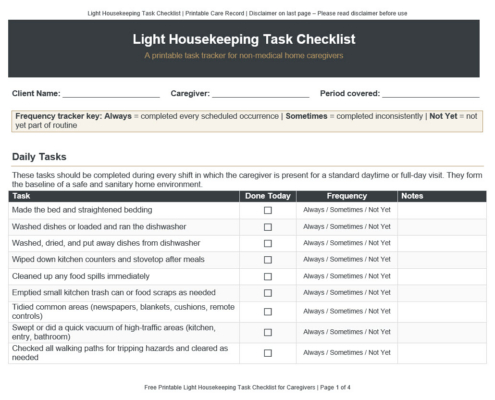 https://carehomecare.com/wp-content/uploads/2026/05/Light-Housekeeping-Checklist-for-Home-Caregivers-1.jpg
832
1080
Moti Gamburd
https://a81019caredemo.wpengine.com/wp-content/uploads/2019/08/CARE-Homecare-Logo-wht.png
Moti Gamburd2026-05-13 11:11:172026-05-14 02:13:21Light Housekeeping Checklist for Home Caregivers | Free Printable PDF
https://carehomecare.com/wp-content/uploads/2026/05/Light-Housekeeping-Checklist-for-Home-Caregivers-1.jpg
832
1080
Moti Gamburd
https://a81019caredemo.wpengine.com/wp-content/uploads/2019/08/CARE-Homecare-Logo-wht.png
Moti Gamburd2026-05-13 11:11:172026-05-14 02:13:21Light Housekeeping Checklist for Home Caregivers | Free Printable PDF https://carehomecare.com/wp-content/uploads/2026/05/Home-Safety-Checklist-for-Seniors-Free-Printable-Room-by-Room-Guide-PDF-Download.jpg
804
1042
Moti Gamburd
https://a81019caredemo.wpengine.com/wp-content/uploads/2019/08/CARE-Homecare-Logo-wht.png
Moti Gamburd2026-05-12 01:27:302026-05-13 02:09:16Home Safety Checklist for Seniors | Room by Room (Free Printable PDF)
https://carehomecare.com/wp-content/uploads/2026/05/Home-Safety-Checklist-for-Seniors-Free-Printable-Room-by-Room-Guide-PDF-Download.jpg
804
1042
Moti Gamburd
https://a81019caredemo.wpengine.com/wp-content/uploads/2019/08/CARE-Homecare-Logo-wht.png
Moti Gamburd2026-05-12 01:27:302026-05-13 02:09:16Home Safety Checklist for Seniors | Room by Room (Free Printable PDF) https://carehomecare.com/wp-content/uploads/2026/05/In-Home-Care-Agency-Checklist-Questions-to-Ask-Before-You-Hire.jpg
831
1078
Moti Gamburd
https://a81019caredemo.wpengine.com/wp-content/uploads/2019/08/CARE-Homecare-Logo-wht.png
Moti Gamburd2026-05-04 01:29:142026-05-13 02:07:13In-Home Care Agency Checklist | Questions to Ask Before You Hire
https://carehomecare.com/wp-content/uploads/2026/05/In-Home-Care-Agency-Checklist-Questions-to-Ask-Before-You-Hire.jpg
831
1078
Moti Gamburd
https://a81019caredemo.wpengine.com/wp-content/uploads/2019/08/CARE-Homecare-Logo-wht.png
Moti Gamburd2026-05-04 01:29:142026-05-13 02:07:13In-Home Care Agency Checklist | Questions to Ask Before You Hire https://carehomecare.com/wp-content/uploads/2026/05/Dementia-Daily-Caregiver-Checklist-Free-Printable-PDF-for-Home-Care.jpg
831
1078
Moti Gamburd
https://a81019caredemo.wpengine.com/wp-content/uploads/2019/08/CARE-Homecare-Logo-wht.png
Moti Gamburd2026-05-03 00:17:592026-05-13 02:09:49Dementia Daily Caregiver Checklist | Free Printable PDF for Home Care
https://carehomecare.com/wp-content/uploads/2026/05/Dementia-Daily-Caregiver-Checklist-Free-Printable-PDF-for-Home-Care.jpg
831
1078
Moti Gamburd
https://a81019caredemo.wpengine.com/wp-content/uploads/2019/08/CARE-Homecare-Logo-wht.png
Moti Gamburd2026-05-03 00:17:592026-05-13 02:09:49Dementia Daily Caregiver Checklist | Free Printable PDF for Home Care https://carehomecare.com/wp-content/uploads/2026/05/ADL-IADL-Checklist-for-Seniors-Free-Printable-Assessment-PDF-Download.jpg
795
1041
Moti Gamburd
https://a81019caredemo.wpengine.com/wp-content/uploads/2019/08/CARE-Homecare-Logo-wht.png
Moti Gamburd2026-05-01 17:41:202026-05-13 02:10:25ADL / IADL Checklist for Seniors - Free Printable Assessment (PDF Download)
https://carehomecare.com/wp-content/uploads/2026/05/ADL-IADL-Checklist-for-Seniors-Free-Printable-Assessment-PDF-Download.jpg
795
1041
Moti Gamburd
https://a81019caredemo.wpengine.com/wp-content/uploads/2019/08/CARE-Homecare-Logo-wht.png
Moti Gamburd2026-05-01 17:41:202026-05-13 02:10:25ADL / IADL Checklist for Seniors - Free Printable Assessment (PDF Download)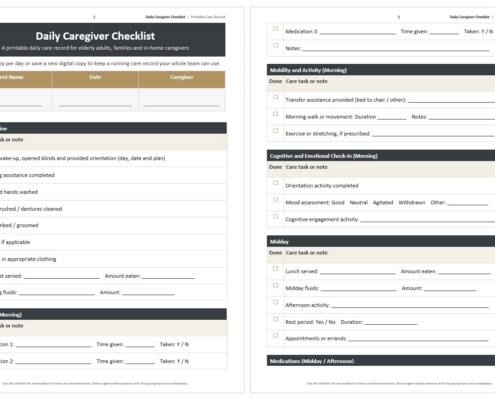 https://carehomecare.com/wp-content/uploads/2026/05/Free-Printable-Caregiver-Daily-Checklist-for-Elderly-PDF-Download.jpg
877
1352
Moti Gamburd
https://a81019caredemo.wpengine.com/wp-content/uploads/2019/08/CARE-Homecare-Logo-wht.png
Moti Gamburd2026-04-21 16:12:122026-05-14 02:01:30Free Printable Caregiver Daily Checklist for Elderly (PDF Download)
https://carehomecare.com/wp-content/uploads/2026/05/Free-Printable-Caregiver-Daily-Checklist-for-Elderly-PDF-Download.jpg
877
1352
Moti Gamburd
https://a81019caredemo.wpengine.com/wp-content/uploads/2019/08/CARE-Homecare-Logo-wht.png
Moti Gamburd2026-04-21 16:12:122026-05-14 02:01:30Free Printable Caregiver Daily Checklist for Elderly (PDF Download) https://carehomecare.com/wp-content/uploads/2026/03/24-7-vs-12-Hour-Shifts-for-Home-Care.jpg
1706
2553
Mendy Perlman
https://a81019caredemo.wpengine.com/wp-content/uploads/2019/08/CARE-Homecare-Logo-wht.png
Mendy Perlman2026-03-14 03:46:542026-03-15 03:52:2924/7 vs 12-Hour Shifts for Home Care - Coverage Models to Compare
https://carehomecare.com/wp-content/uploads/2026/03/24-7-vs-12-Hour-Shifts-for-Home-Care.jpg
1706
2553
Mendy Perlman
https://a81019caredemo.wpengine.com/wp-content/uploads/2019/08/CARE-Homecare-Logo-wht.png
Mendy Perlman2026-03-14 03:46:542026-03-15 03:52:2924/7 vs 12-Hour Shifts for Home Care - Coverage Models to Compare
