
Contents

A Family Guide to Home Care After Hospital Discharge
Leaving the hospital after surgery or illness should feel like a victory. The truth is it begins a delicate phase where recovery can falter without the right support. Hospitals release people when they are medically stable, not when they are fully healed. Families suddenly face a steep learning curve with discharge instructions, new medications, wound care instructions from clinicians and fragile mobility. The margin for error is small. Many patients return to the hospital within days because of preventable issues like poor nutrition, falls, medication confusion or skipped follow up appointments.
This is where professional home care after hospital discharge changes the outcome. By closing the gaps between medical orders and daily life, caregivers keep recovery on track, reduce stress for families and help patients regain independence in a safe and structured way.
This guide draws on years of experience supporting families in Los Angeles and Orange County. It explains what happens after discharge, why home care matters and how a structured plan prevents readmission.
–
View, Download or Print our Free Hospital Discharge Checklist PDF to help you stay organized when a loved one is being discharged from the hospital.
Key Takeaways
- Discharge is the most fragile phase of recovery
- Early planning before leaving the hospital prevents chaos at home
- The first 72 hours and two weeks set the tone for healing
- Hidden risks like nutrition, meds and falls drive many readmissions
- Professional home care turns dense instructions into daily routines
- Emotional support matters as much as physical care
- CARE Homecare provides tailored services across Los Angeles and Orange County
- Choosing the right care level, including 24-hour home care, protects safety and independence
Post-Hospital Home Care Support Across Los Angeles and Orange County by CARE Homecare
Recovering at home after a hospital stay should feel safe, not overwhelming. CARE Homecare provides personalized in-home support across Los Angeles and Orange County, from flexible hourly visits to 24-hour care.
Our trained caregivers help with daily routines, mobility, meal preparation, companionship, and home safety so families can focus on healing rather than worrying about what comes next.
Why Discharge Planning Starts Before You Leave the Hospital

Many families wait until the day of discharge to consider what comes next. That is a mistake. Hospitals move quickly, and once you are told it is time to go home there is little room to organize support.
The most effective plans begin during the hospital stay. Families should ask about likely needs at home, potential risks and how long recovery milestones usually take. Questions about wound care, medications, diet changes, physical therapy and follow up appointments should be asked before leaving the floor.
Hospitals may arrange for licensed home health services if the doctor writes an order. This covers skilled tasks like wound checks or therapy visits. What often gets overlooked is non medical in-home care services. These services provide help with ADLs like bathing, toileting, meal preparation, reminders and mobility support. Without them, discharge instructions often cannot be followed as written.
Our article ‘Why Discharge Planning Starts Before You Leave the Hospital’ explains why looping in a home care agency early ensures a smooth transition. At CARE Homecare we coordinate with discharge planners and physicians so the first hours at home are predictable rather than chaotic.
The First 72 Hours – The Fragile Beginning
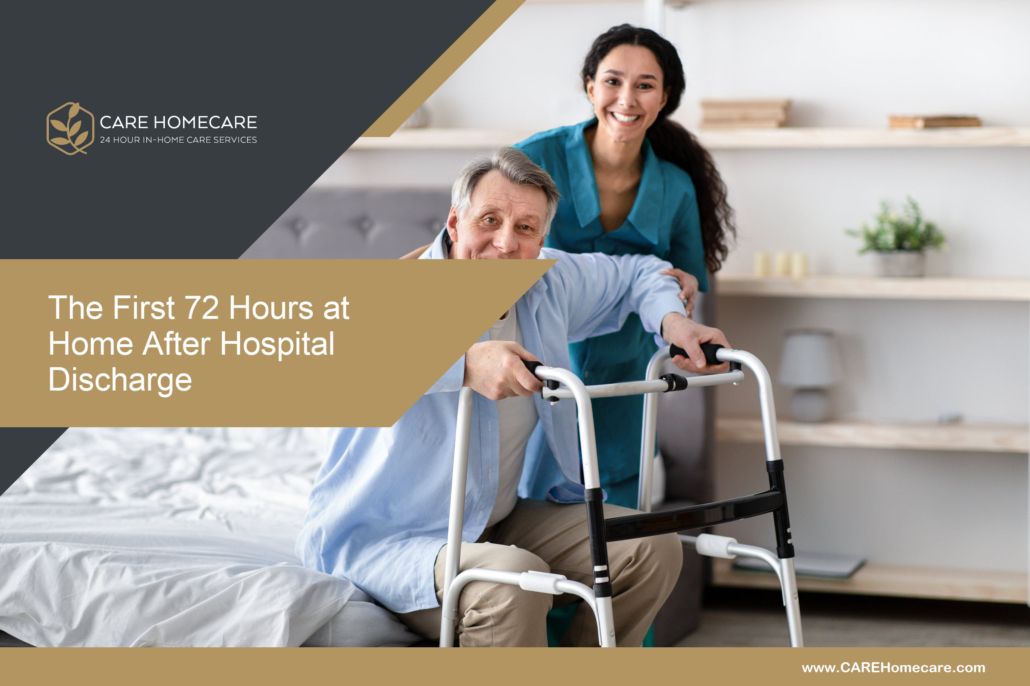
The first three days at home set the tone for the entire recovery. This period is filled with small but high stakes decisions. Families often underestimate how fragile their loved one feels once the constant monitoring of the hospital ends.
In our article ‘The First 72 Hours at Home After Hospital Discharge’ we outline why this window matters most. Patients face challenges with new medications, fragile mobility, bathroom safety, appetite and sleep disruption. A missed dose, a skipped meal or a trip hazard can create a cascade of setbacks.
Our professional home caregivers in Los Angeles and Orange County structure these first hours with written schedules, safety adjustments and constant observation. A caregiver ensures pain is managed through medication reminders, nutrition is adequate and hydration is consistent. This attention reduces stress for families and prevents the small gaps that so often send patients back to the hospital.
The First Two Weeks – A Practical Playbook
After the initial 72 hours, the next two weeks remain crucial. By this stage families hope routines feel stable, but setbacks are common. Pain can fluctuate. Constipation from pain medication may appear days later. A wound can look fine one day and inflamed the next. Fatigue can interfere with mobility goals, leading to muscle loss and higher fall risk.
Our guide ‘The First Two Weeks at Home After Hospital Discharge – A Practical Playbook’ provides a roadmap. It emphasizes scheduled check-ins, daily walking goals, safe bathroom routines and consistent wound monitoring.
At CARE Homecare we design a simple written playbook for each family. It lists medication times, meals, hydration, exercise, toileting and rest. We can place it on the fridge so every family member and caregiver can follow the same plan. This coordination reduces confusion and keeps recovery predictable.
Hidden Risks Families Often Miss
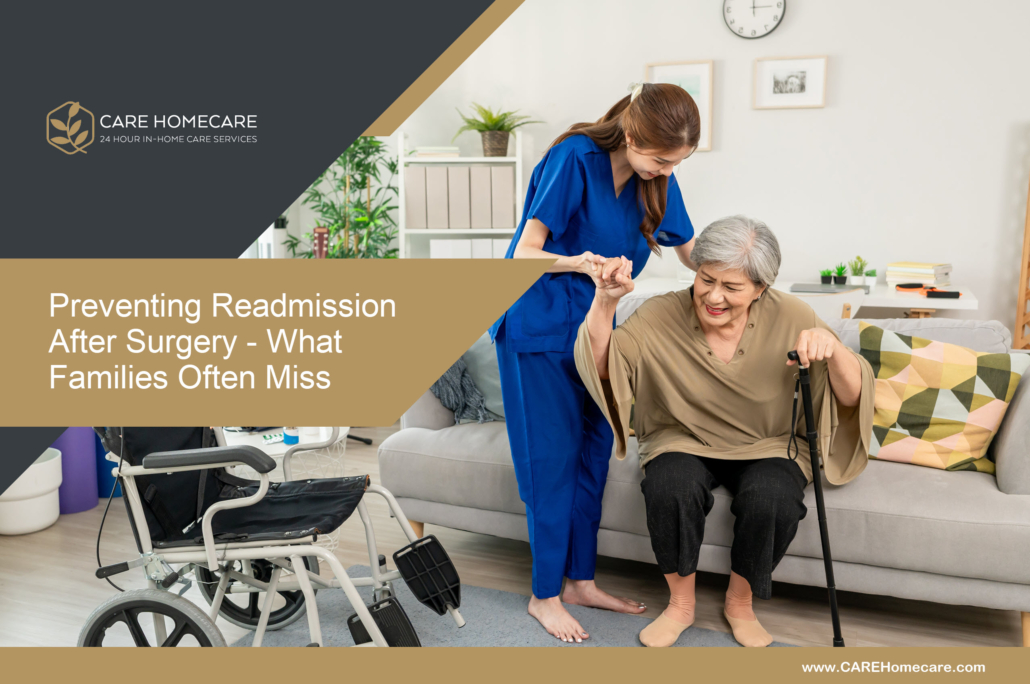
Families focus on the big picture of healing but often overlook subtle issues that drive setbacks. Our article ‘Preventing Readmission After Surgery – What Families Often Miss’ details these risks.
Medication Confusion
New prescriptions, stopped old medications and changing doses create confusion. Without structured reminders, people fall back into old routines or miss doses. The CDC reports that adverse drug events send hundreds of thousands of older adults to the emergency department each year, particularly around care transitions.
Home care helps by organizing medications, supporting reminders, using pillboxes and contacting prescribers if side effects appear.
Nutrition and Hydration
Healing requires calories, protein and fluids. Yet pain, nausea and appetite loss are common. The National Institute on Aging highlights malnutrition and dehydration as drivers of poor recovery.
Home care helps by preparing protein rich meals, encouraging fluids and tracking intake. CARE Homecare’s meal planning and preparation emphasizes small frequent meals with soft textures or smoothies when needed.
Falls and Mobility Setbacks
Falls within two weeks of discharge are common and often lead to new complications. Hazards like loose rugs or poor lighting are overlooked until an accident occurs.
Home care helps by scanning rooms, adjusting furniture, supervising transfers and guiding daily exercise. Our exercise and strengthening program restores strength while preventing overexertion.
Pain Management
Too little pain control discourages movement. Too much causes sedation and falls. Families often guess at timing, leading to inconsistencies.
Home care helps by providing reminders based on physician guidance, observing effectiveness and using non drug strategies like positioning or ice.
Wound Care
Dressings and drains require clean technique and attention to changes. Families may feel uncertain about what is normal.
Home care helps by reminding families of the surgeon’s instructions, supporting clean surroundings and alerting clinicians if redness, drainage or fever appear.
Missed Follow Ups
Appointments get skipped when transportation is difficult or the patient feels too weak. This delay often leads to worsening symptoms.
Home care helps with transportation assistance, appointment preparation and symptom documentation for the clinician.
Decoding Discharge Paperwork

Hospital discharge instructions are often dense and filled with medical jargon. Families leave with a packet of papers but little clarity on what matters most.
Our article ‘Discharge Paperwork Decoded – A Family Caregiver’s Guide’ explains how to read each section. Medication lists, activity restrictions, diet changes, wound care instructions and red flag warnings are all included. Families must understand not just what to do but when to call for help.
Home caregivers bridge the gap by reviewing paperwork line by line, setting schedules and creating simple reminders. By turning dense documents into daily routines, caregivers protect against errors.
The Emotional Transition

Leaving the hospital brings relief but also fear. Patients may feel abandoned without call buttons or nurses nearby. Families feel anxious about being responsible for complex care tasks.
Our article ‘The Emotional Shock of Coming Home From the Hospital’ explores this adjustment. Anxiety, sleep disruption and even depression can follow discharge. Caregivers provide reassurance, companionship and structure.
CARE Homecare’s companionship and social engagement services address these emotional needs as much as physical ones. Families often underestimate how powerful it is to have a calm, consistent presence in the home.
How CARE Homecare Supports Every Phase
Our team supports families across Los Angeles and Orange County with tailored in-home care services. We focus on practical routines that align with discharge instructions, physician recommendations, and family needs. Services include:
- Medication assistance and reminders
- Meal planning and preparation
- Light exercise support and safe movement encouragement
- Light housekeeping
- Transportation assistance
- 24 hour home care in Los Angeles and Orange County when continuous supervision is required
We coordinate with families, physicians, hospitals and licensed home health agencies to ensure nothing falls through the cracks.
Local Expertise Matters in Los Angeles and Orange County
Recovery at home is shaped by local challenges. Long drives and traffic make follow ups harder. Apartment layouts complicate safe transfers. Families often juggle caregiving with work and children.
Having a local partner means caregivers who know the area, understand local resources and can arrive on time. CARE Homecare builds schedules that match both the physician’s plan and the family’s realities.
Evidence Based Care
Research confirms that readmission prevention depends on clear instructions, medication reconciliation, early follow up and home support.
CARE Homecare’s workflows align with these national best practices. We translate evidence into daily action so recovery does not depend on guesswork.
Choosing Between 24 Hour Home Care and Shorter Visits
Families often wonder how much care is enough. Some patients need only a few hours per day for meals, medications and supervision. Others require round the clock support.
Our guide ‘24-Hour Care vs Live-In Care’ explains the differences. In short, 24 hour care ensures someone is awake and alert at all times, while live in care places one caregiver in the home with scheduled rest periods. CARE Homecare helps families choose the most efficient and safe model.
What Families Can Do Today
If your loved one is scheduled for discharge soon, begin preparing now. Ask questions in the hospital. Involve a home care agency early. Create a simple written plan that covers medication reminders, meals, hydration, mobility, wound care instructions and rest.
Review our resources:
The First 72 Hours at Home After Hospital Discharge
The First Two Weeks at Home After Hospital Discharge – A Practical Playbook
Preventing Readmission After Surgery – What Families Often Miss
Discharge Paperwork Decoded – A Family Caregiver’s Guide
Why Discharge Planning Starts Before You Leave the Hospital
The Emotional Shock of Coming Home From the Hospital
Each article offers practical advice for different stages of recovery after returning home from the hospital.
Contact CARE Homecare Today for Post Hospital Discharge Home Care Services
If your loved one is preparing for hospital discharge in LA or OC, do not face it alone. CARE Homecare provides expert in home care services that keep recovery safe, predictable and supported.
Contact us today through our Contact Us page to discuss a plan tailored to your family.
You can also send us an email or give us a call.
Address: 1156 North Gardner Street, West Hollywood, CA 90046
Telephone: (323) 851-1422
Email: info@carehomecare.com

 https://carehomecare.com/wp-content/uploads/2026/05/Post-Surgery-Home-Care-Checklist-Non-Medical-Support-for-Recovery-at-Home-Free-PDF-and-Word-Download.jpg
839
1315
Moti Gamburd
https://a81019caredemo.wpengine.com/wp-content/uploads/2019/08/CARE-Homecare-Logo-wht.png
Moti Gamburd2026-05-14 20:03:392026-05-14 20:03:39Free Post-Surgery Home Care Checklist | Non-Medical Support for Recovery at Home | PDF or Word Print or Download
https://carehomecare.com/wp-content/uploads/2026/05/Post-Surgery-Home-Care-Checklist-Non-Medical-Support-for-Recovery-at-Home-Free-PDF-and-Word-Download.jpg
839
1315
Moti Gamburd
https://a81019caredemo.wpengine.com/wp-content/uploads/2019/08/CARE-Homecare-Logo-wht.png
Moti Gamburd2026-05-14 20:03:392026-05-14 20:03:39Free Post-Surgery Home Care Checklist | Non-Medical Support for Recovery at Home | PDF or Word Print or Download https://carehomecare.com/wp-content/uploads/2026/05/Home-Care-Supplies-Preparation-Checklist.jpg
842
1316
Moti Gamburd
https://a81019caredemo.wpengine.com/wp-content/uploads/2019/08/CARE-Homecare-Logo-wht.png
Moti Gamburd2026-05-14 18:49:452026-05-14 18:49:45Home Care Supplies Checklist | What to Have Ready Before Care Starts | Free Printable PDF
https://carehomecare.com/wp-content/uploads/2026/05/Home-Care-Supplies-Preparation-Checklist.jpg
842
1316
Moti Gamburd
https://a81019caredemo.wpengine.com/wp-content/uploads/2019/08/CARE-Homecare-Logo-wht.png
Moti Gamburd2026-05-14 18:49:452026-05-14 18:49:45Home Care Supplies Checklist | What to Have Ready Before Care Starts | Free Printable PDF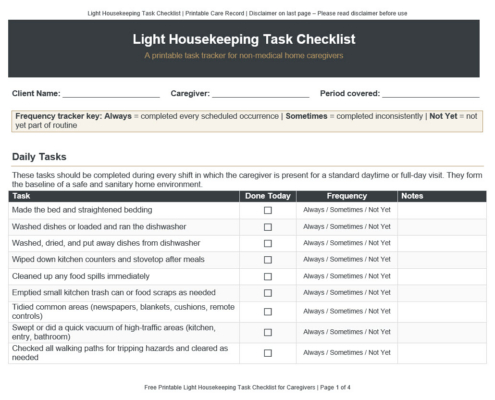 https://carehomecare.com/wp-content/uploads/2026/05/Light-Housekeeping-Checklist-for-Home-Caregivers-1.jpg
832
1080
Moti Gamburd
https://a81019caredemo.wpengine.com/wp-content/uploads/2019/08/CARE-Homecare-Logo-wht.png
Moti Gamburd2026-05-13 11:11:172026-05-14 02:13:21Light Housekeeping Checklist for Home Caregivers | Free Printable PDF
https://carehomecare.com/wp-content/uploads/2026/05/Light-Housekeeping-Checklist-for-Home-Caregivers-1.jpg
832
1080
Moti Gamburd
https://a81019caredemo.wpengine.com/wp-content/uploads/2019/08/CARE-Homecare-Logo-wht.png
Moti Gamburd2026-05-13 11:11:172026-05-14 02:13:21Light Housekeeping Checklist for Home Caregivers | Free Printable PDF https://carehomecare.com/wp-content/uploads/2026/05/Home-Safety-Checklist-for-Seniors-Free-Printable-Room-by-Room-Guide-PDF-Download.jpg
804
1042
Moti Gamburd
https://a81019caredemo.wpengine.com/wp-content/uploads/2019/08/CARE-Homecare-Logo-wht.png
Moti Gamburd2026-05-12 01:27:302026-05-13 02:09:16Home Safety Checklist for Seniors | Room by Room (Free Printable PDF)
https://carehomecare.com/wp-content/uploads/2026/05/Home-Safety-Checklist-for-Seniors-Free-Printable-Room-by-Room-Guide-PDF-Download.jpg
804
1042
Moti Gamburd
https://a81019caredemo.wpengine.com/wp-content/uploads/2019/08/CARE-Homecare-Logo-wht.png
Moti Gamburd2026-05-12 01:27:302026-05-13 02:09:16Home Safety Checklist for Seniors | Room by Room (Free Printable PDF) https://carehomecare.com/wp-content/uploads/2026/05/In-Home-Care-Agency-Checklist-Questions-to-Ask-Before-You-Hire.jpg
831
1078
Moti Gamburd
https://a81019caredemo.wpengine.com/wp-content/uploads/2019/08/CARE-Homecare-Logo-wht.png
Moti Gamburd2026-05-04 01:29:142026-05-13 02:07:13In-Home Care Agency Checklist | Questions to Ask Before You Hire
https://carehomecare.com/wp-content/uploads/2026/05/In-Home-Care-Agency-Checklist-Questions-to-Ask-Before-You-Hire.jpg
831
1078
Moti Gamburd
https://a81019caredemo.wpengine.com/wp-content/uploads/2019/08/CARE-Homecare-Logo-wht.png
Moti Gamburd2026-05-04 01:29:142026-05-13 02:07:13In-Home Care Agency Checklist | Questions to Ask Before You Hire https://carehomecare.com/wp-content/uploads/2026/05/Dementia-Daily-Caregiver-Checklist-Free-Printable-PDF-for-Home-Care.jpg
831
1078
Moti Gamburd
https://a81019caredemo.wpengine.com/wp-content/uploads/2019/08/CARE-Homecare-Logo-wht.png
Moti Gamburd2026-05-03 00:17:592026-05-13 02:09:49Dementia Daily Caregiver Checklist | Free Printable PDF for Home Care
https://carehomecare.com/wp-content/uploads/2026/05/Dementia-Daily-Caregiver-Checklist-Free-Printable-PDF-for-Home-Care.jpg
831
1078
Moti Gamburd
https://a81019caredemo.wpengine.com/wp-content/uploads/2019/08/CARE-Homecare-Logo-wht.png
Moti Gamburd2026-05-03 00:17:592026-05-13 02:09:49Dementia Daily Caregiver Checklist | Free Printable PDF for Home Care https://carehomecare.com/wp-content/uploads/2026/05/ADL-IADL-Checklist-for-Seniors-Free-Printable-Assessment-PDF-Download.jpg
795
1041
Moti Gamburd
https://a81019caredemo.wpengine.com/wp-content/uploads/2019/08/CARE-Homecare-Logo-wht.png
Moti Gamburd2026-05-01 17:41:202026-05-13 02:10:25ADL / IADL Checklist for Seniors - Free Printable Assessment (PDF Download)
https://carehomecare.com/wp-content/uploads/2026/05/ADL-IADL-Checklist-for-Seniors-Free-Printable-Assessment-PDF-Download.jpg
795
1041
Moti Gamburd
https://a81019caredemo.wpengine.com/wp-content/uploads/2019/08/CARE-Homecare-Logo-wht.png
Moti Gamburd2026-05-01 17:41:202026-05-13 02:10:25ADL / IADL Checklist for Seniors - Free Printable Assessment (PDF Download)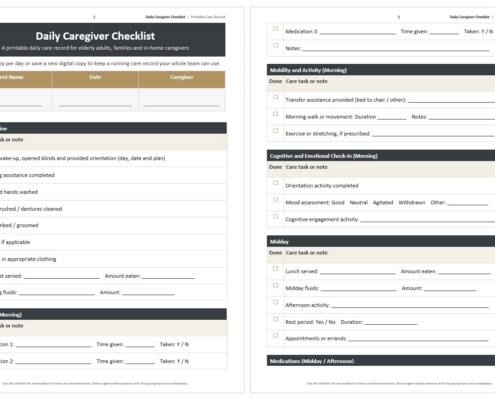 https://carehomecare.com/wp-content/uploads/2026/05/Free-Printable-Caregiver-Daily-Checklist-for-Elderly-PDF-Download.jpg
877
1352
Moti Gamburd
https://a81019caredemo.wpengine.com/wp-content/uploads/2019/08/CARE-Homecare-Logo-wht.png
Moti Gamburd2026-04-21 16:12:122026-05-14 02:01:30Free Printable Caregiver Daily Checklist for Elderly (PDF Download)
https://carehomecare.com/wp-content/uploads/2026/05/Free-Printable-Caregiver-Daily-Checklist-for-Elderly-PDF-Download.jpg
877
1352
Moti Gamburd
https://a81019caredemo.wpengine.com/wp-content/uploads/2019/08/CARE-Homecare-Logo-wht.png
Moti Gamburd2026-04-21 16:12:122026-05-14 02:01:30Free Printable Caregiver Daily Checklist for Elderly (PDF Download) https://carehomecare.com/wp-content/uploads/2026/03/24-7-vs-12-Hour-Shifts-for-Home-Care.jpg
1706
2553
Mendy Perlman
https://a81019caredemo.wpengine.com/wp-content/uploads/2019/08/CARE-Homecare-Logo-wht.png
Mendy Perlman2026-03-14 03:46:542026-03-15 03:52:2924/7 vs 12-Hour Shifts for Home Care - Coverage Models to Compare
https://carehomecare.com/wp-content/uploads/2026/03/24-7-vs-12-Hour-Shifts-for-Home-Care.jpg
1706
2553
Mendy Perlman
https://a81019caredemo.wpengine.com/wp-content/uploads/2019/08/CARE-Homecare-Logo-wht.png
Mendy Perlman2026-03-14 03:46:542026-03-15 03:52:2924/7 vs 12-Hour Shifts for Home Care - Coverage Models to Compare
