
Contents
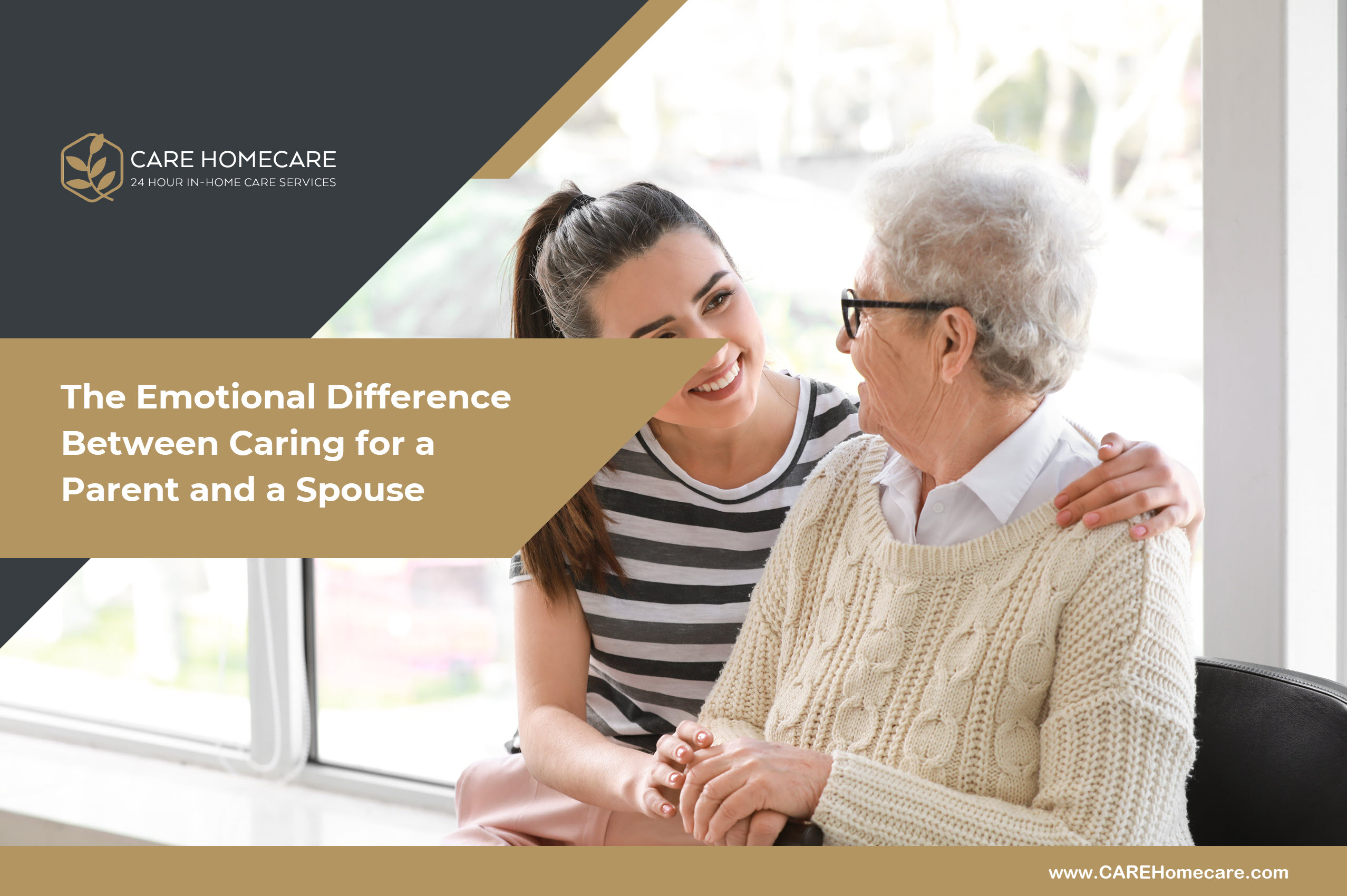
The Emotional Difference Between Caring for a Parent and a Spouse
Caring for someone you love is never just about tasks. It is about identity, history, expectations, and emotional bonds. While caregiving for a parent and caregiving for a spouse may involve similar daily responsibilities, the emotional experience behind those responsibilities is fundamentally different.
Many caregivers struggle not because they are doing something wrong, but because they are trying to apply the same emotional framework to two very different relationships. Understanding these differences helps caregivers release self-blame, recognize burnout earlier, and accept support without guilt.
Key Takeaways
- Caring for a parent and caring for a spouse create fundamentally different emotional strains.
- Parent caregiving often involves role reversal, guilt, and sibling dynamics.
- Spousal caregiving often involves grief, loneliness, and loss of partnership.
- Burnout develops differently depending on the relationship.
- Professional care relieves strain while preserving emotional connection.
- Early support prevents long-term emotional damage.
Support That Protects Emotional Bonds Across Los Angeles and Orange County
Needing help does not mean you are failing as a spouse or as a child. It means caregiving has reached a point where support protects the relationship rather than strains it. Caring for a parent and caring for a spouse carry different emotional burdens, but both can lead to burnout when handled alone.
CARE Homecare supports families across Los Angeles and Orange County with professional in-home care that relieves daily pressure while preserving dignity and connection. Our caregivers assist with mobility, meals, companionship, medication reminders, and home safety so loved ones can focus on being present, not overwhelmed.
Early support helps prevent guilt, resentment, and emotional withdrawal before they reshape the relationship. Call to discuss a care plan that honors your role and protects your well-being.

Why Relationship Type Changes the Caregiving Experience
Caregiving sits on top of a lifetime of emotional roles. When the relationship changes, the emotional load changes with it.
Caring for a parent often requires stepping into authority while still feeling like a child. Caregivers may feel torn between respect and responsibility, independence and protection. The relationship becomes layered with obligation and unresolved family dynamics.
Caring for a spouse reshapes identity more deeply. Spouses often lose a partner and gain a dependent at the same time. The emotional toll comes not from role reversal, but from role erosion. Equality, shared decision-making, and emotional reciprocity slowly disappear.
These differences explain why caregivers often feel confused by their reactions. The strain is not a personal failure. It is a predictable emotional response to a shifting relationship.

The Emotional Weight of Caring for a Parent
Caring for a parent often activates childhood patterns. Adult children may feel pressure to be the responsible one or the dependable one, even when the burden becomes overwhelming.
Role Reversal and Boundary Confusion
Helping a parent with personal care, finances, or safety decisions can feel deeply uncomfortable. Parents may resist help to preserve dignity. Adult children may hesitate to assert boundaries for fear of being disrespectful.
This tension creates constant emotional friction.
Guilt and Obligation
Many adult children feel they should be able to handle caregiving alone. Cultural and family expectations reinforce the belief that children owe care to parents regardless of personal cost. This guilt often prevents caregivers from asking for help.
This dynamic is closely tied to becoming the default caregiver, a pattern explored in the hidden toll of being the default caregiver.
Sibling Influence
Caring for a parent rarely happens in isolation. Sibling involvement, or lack of it, adds pressure, resentment, and conflict. Unequal responsibility often intensifies emotional strain and decision fatigue.

The Emotional Weight of Caring for a Spouse
Spousal caregiving carries a quieter but heavier grief. The caregiver is not stepping into authority. They are watching equality fade.
Spouses often define themselves through partnership. When illness or decline changes that dynamic, caregivers lose emotional support while gaining responsibility. This dual loss is deeply destabilizing.
Loneliness Inside the Relationship
Spousal caregivers are often physically close but emotionally isolated. Conversations become task-focused. Intimacy fades. Friends may pull away, unsure how to engage.
Anticipatory Grief
Spousal caregivers often grieve the future before it arrives. Worry about decline, finances, and long-term stability becomes constant. This ongoing fear accelerates emotional exhaustion.
How Caregiver Burnout Shows Up Differently in Parents vs Spouses
Burnout is universal, but its emotional expression depends on the relationship.
Adult children often experience frustration followed by guilt. They may feel trapped between personal life and obligation. Spouses more often experience sadness, numbness, and emotional withdrawal.
Early Burnout Signs
Adult children may feel irritable, resentful, or impatient. Spouses may feel lonely, disconnected, or quietly depressed. Both may dismiss symptoms as temporary.
Late Burnout Patterns
As burnout deepens, adult children may withdraw emotionally or disengage from siblings. Spouses may lose their sense of self entirely. Sleep disruption, anxiety, and declining health become common.
Burnout often intensifies during care transitions like those described in the first 72 hours at home after hospital discharge and the first two weeks at home after hospital discharge.

Why Professional Care Feels Different for Parents vs Spouses
Professional care interacts differently with each caregiving role.
For Adult Children
Professional caregivers reduce guilt by sharing responsibility. Adult children regain the ability to be present emotionally rather than constantly managing tasks. Relief often comes with hesitation, shaped by long-held beliefs about obligation.
For Spouses
Professional caregivers restore emotional space. By removing constant task demands, spouses can reconnect emotionally rather than interacting only through care routines. Fear of being replaced often fades once relief is experienced.
Understanding what home care providers do helps caregivers see support as complementary rather than intrusive.
How Professional Care Protects Emotional Relationships
Professional care allows caregivers to return to relational roles.
Adult children can focus on connection rather than coordination. Spouses can experience moments of partnership again rather than constant vigilance.
Learning about home care benefits reframes support as a strategy for preserving love rather than admitting failure.
When to Seek Support Before the Relationship Suffers
Waiting too long to seek support carries emotional costs. Relationships shift subtly at first, then permanently.
Warning signs include emotional withdrawal, loss of patience, constant tension, or feeling more like a caregiver than a loved one. Over time, these patterns become harder to undo.
Early support protects emotional health and preserves connection. Understanding what home care is and how to choose a home care agency gives families clarity without urgency or pressure.
Support That Respects Relationships and Restores Balance
Caring for a parent or a spouse should not require sacrificing your emotional health or your relationship. CARE Homecare supports families across Los Angeles and Orange County with in-home care that reduces strain, shares responsibility, and protects connection.
Whether you need short-term support or ongoing care, our team helps you build a plan that honors your relationship while safeguarding your well-being.
Visit our Contact Us page to discuss a care plan tailored to your family.
You can also reach us via email or by giving us a call.
Address: 1156 North Gardner Street, West Hollywood, CA 90046
Telephone: (323) 851-1422
Email: info@carehomecare.com

 https://carehomecare.com/wp-content/uploads/2026/03/24-7-vs-12-Hour-Shifts-for-Home-Care.jpg
1706
2553
Mendy Perlman
https://a81019caredemo.wpengine.com/wp-content/uploads/2019/08/CARE-Homecare-Logo-wht.png
Mendy Perlman2026-03-14 03:46:542026-03-15 03:52:2924/7 vs 12-Hour Shifts for Home Care - Coverage Models to Compare
https://carehomecare.com/wp-content/uploads/2026/03/24-7-vs-12-Hour-Shifts-for-Home-Care.jpg
1706
2553
Mendy Perlman
https://a81019caredemo.wpengine.com/wp-content/uploads/2019/08/CARE-Homecare-Logo-wht.png
Mendy Perlman2026-03-14 03:46:542026-03-15 03:52:2924/7 vs 12-Hour Shifts for Home Care - Coverage Models to Compare https://carehomecare.com/wp-content/uploads/2026/02/What-is-24-7-Home-Care.jpg
1697
2553
Moti Gamburd
https://a81019caredemo.wpengine.com/wp-content/uploads/2019/08/CARE-Homecare-Logo-wht.png
Moti Gamburd2026-03-13 08:49:232026-03-15 03:54:32What is 24/7 Home Care? What It Includes, Who It’s For, and How Scheduling Works
https://carehomecare.com/wp-content/uploads/2026/02/What-is-24-7-Home-Care.jpg
1697
2553
Moti Gamburd
https://a81019caredemo.wpengine.com/wp-content/uploads/2019/08/CARE-Homecare-Logo-wht.png
Moti Gamburd2026-03-13 08:49:232026-03-15 03:54:32What is 24/7 Home Care? What It Includes, Who It’s For, and How Scheduling Works https://carehomecare.com/wp-content/uploads/2026/02/Printable-Caregiver-Burnout-Self-Check-Worksheet.jpg
748
1166
Mendy Perlman
https://a81019caredemo.wpengine.com/wp-content/uploads/2019/08/CARE-Homecare-Logo-wht.png
Mendy Perlman2026-02-15 20:32:402026-02-15 20:32:40Free Printable Caregiver Burnout Self-Check Worksheet PDF and Burnout Prevention Guide
https://carehomecare.com/wp-content/uploads/2026/02/Printable-Caregiver-Burnout-Self-Check-Worksheet.jpg
748
1166
Mendy Perlman
https://a81019caredemo.wpengine.com/wp-content/uploads/2019/08/CARE-Homecare-Logo-wht.png
Mendy Perlman2026-02-15 20:32:402026-02-15 20:32:40Free Printable Caregiver Burnout Self-Check Worksheet PDF and Burnout Prevention Guide https://carehomecare.com/wp-content/uploads/2026/02/Why-Caregiver-Resentment-Builds-and-How-to-Stop-It-Early.jpg
1691
2553
Mendy Perlman
https://a81019caredemo.wpengine.com/wp-content/uploads/2019/08/CARE-Homecare-Logo-wht.png
Mendy Perlman2026-02-15 19:20:082026-03-14 19:16:45Why Caregiver Resentment Builds and How to Stop It Early
https://carehomecare.com/wp-content/uploads/2026/02/Why-Caregiver-Resentment-Builds-and-How-to-Stop-It-Early.jpg
1691
2553
Mendy Perlman
https://a81019caredemo.wpengine.com/wp-content/uploads/2019/08/CARE-Homecare-Logo-wht.png
Mendy Perlman2026-02-15 19:20:082026-03-14 19:16:45Why Caregiver Resentment Builds and How to Stop It Early https://carehomecare.com/wp-content/uploads/2026/01/The-Emotional-Difference-Between-Caring-for-a-Parent-and-a-Spouse.jpeg
1700
2555
Mendy Perlman
https://a81019caredemo.wpengine.com/wp-content/uploads/2019/08/CARE-Homecare-Logo-wht.png
Mendy Perlman2026-01-13 19:32:432026-03-14 19:17:18The Emotional Difference Between Caring for a Parent and a Spouse
https://carehomecare.com/wp-content/uploads/2026/01/The-Emotional-Difference-Between-Caring-for-a-Parent-and-a-Spouse.jpeg
1700
2555
Mendy Perlman
https://a81019caredemo.wpengine.com/wp-content/uploads/2019/08/CARE-Homecare-Logo-wht.png
Mendy Perlman2026-01-13 19:32:432026-03-14 19:17:18The Emotional Difference Between Caring for a Parent and a Spouse https://carehomecare.com/wp-content/uploads/2026/01/Sibling-Conflict-Over-Parent-Care-and-How-to-Avoid-Family-Feuds.jpg
1693
2555
Moti Gamburd
https://a81019caredemo.wpengine.com/wp-content/uploads/2019/08/CARE-Homecare-Logo-wht.png
Moti Gamburd2026-01-06 20:23:322026-03-14 19:17:53Sibling Conflict Over Parent Care - How to Avoid Family Feuds
https://carehomecare.com/wp-content/uploads/2026/01/Sibling-Conflict-Over-Parent-Care-and-How-to-Avoid-Family-Feuds.jpg
1693
2555
Moti Gamburd
https://a81019caredemo.wpengine.com/wp-content/uploads/2019/08/CARE-Homecare-Logo-wht.png
Moti Gamburd2026-01-06 20:23:322026-03-14 19:17:53Sibling Conflict Over Parent Care - How to Avoid Family Feuds https://carehomecare.com/wp-content/uploads/2025/12/Why-Family-Caregiver-Guilt-Keeps-People-From-Asking-for-Help.jpeg
1697
2555
Moti Gamburd
https://a81019caredemo.wpengine.com/wp-content/uploads/2019/08/CARE-Homecare-Logo-wht.png
Moti Gamburd2025-12-18 17:44:272026-03-14 19:18:26Why Family Caregiver Guilt Keeps People From Asking for Help
https://carehomecare.com/wp-content/uploads/2025/12/Why-Family-Caregiver-Guilt-Keeps-People-From-Asking-for-Help.jpeg
1697
2555
Moti Gamburd
https://a81019caredemo.wpengine.com/wp-content/uploads/2019/08/CARE-Homecare-Logo-wht.png
Moti Gamburd2025-12-18 17:44:272026-03-14 19:18:26Why Family Caregiver Guilt Keeps People From Asking for Help https://carehomecare.com/wp-content/uploads/2025/12/The-Hidden-Toll-of-Being-the-Default-Caregiver-and-How-to-Prevent-Burnout.jpeg
1697
2551
Moti Gamburd
https://a81019caredemo.wpengine.com/wp-content/uploads/2019/08/CARE-Homecare-Logo-wht.png
Moti Gamburd2025-12-18 00:32:032026-03-14 19:19:01The Hidden Toll of Being the “Default” Caregiver
https://carehomecare.com/wp-content/uploads/2025/12/The-Hidden-Toll-of-Being-the-Default-Caregiver-and-How-to-Prevent-Burnout.jpeg
1697
2551
Moti Gamburd
https://a81019caredemo.wpengine.com/wp-content/uploads/2019/08/CARE-Homecare-Logo-wht.png
Moti Gamburd2025-12-18 00:32:032026-03-14 19:19:01The Hidden Toll of Being the “Default” Caregiver https://carehomecare.com/wp-content/uploads/2025/10/24-Hour-Home-Care-Daily-Caregiver-Log.jpg
759
988
Moti Gamburd
https://a81019caredemo.wpengine.com/wp-content/uploads/2019/08/CARE-Homecare-Logo-wht.png
Moti Gamburd2025-10-31 18:49:032026-03-14 18:36:5424/7 Home Care Documentation - Daily Logs, Checklists & Family Updates
https://carehomecare.com/wp-content/uploads/2025/10/24-Hour-Home-Care-Daily-Caregiver-Log.jpg
759
988
Moti Gamburd
https://a81019caredemo.wpengine.com/wp-content/uploads/2019/08/CARE-Homecare-Logo-wht.png
Moti Gamburd2025-10-31 18:49:032026-03-14 18:36:5424/7 Home Care Documentation - Daily Logs, Checklists & Family Updates
