
Contents
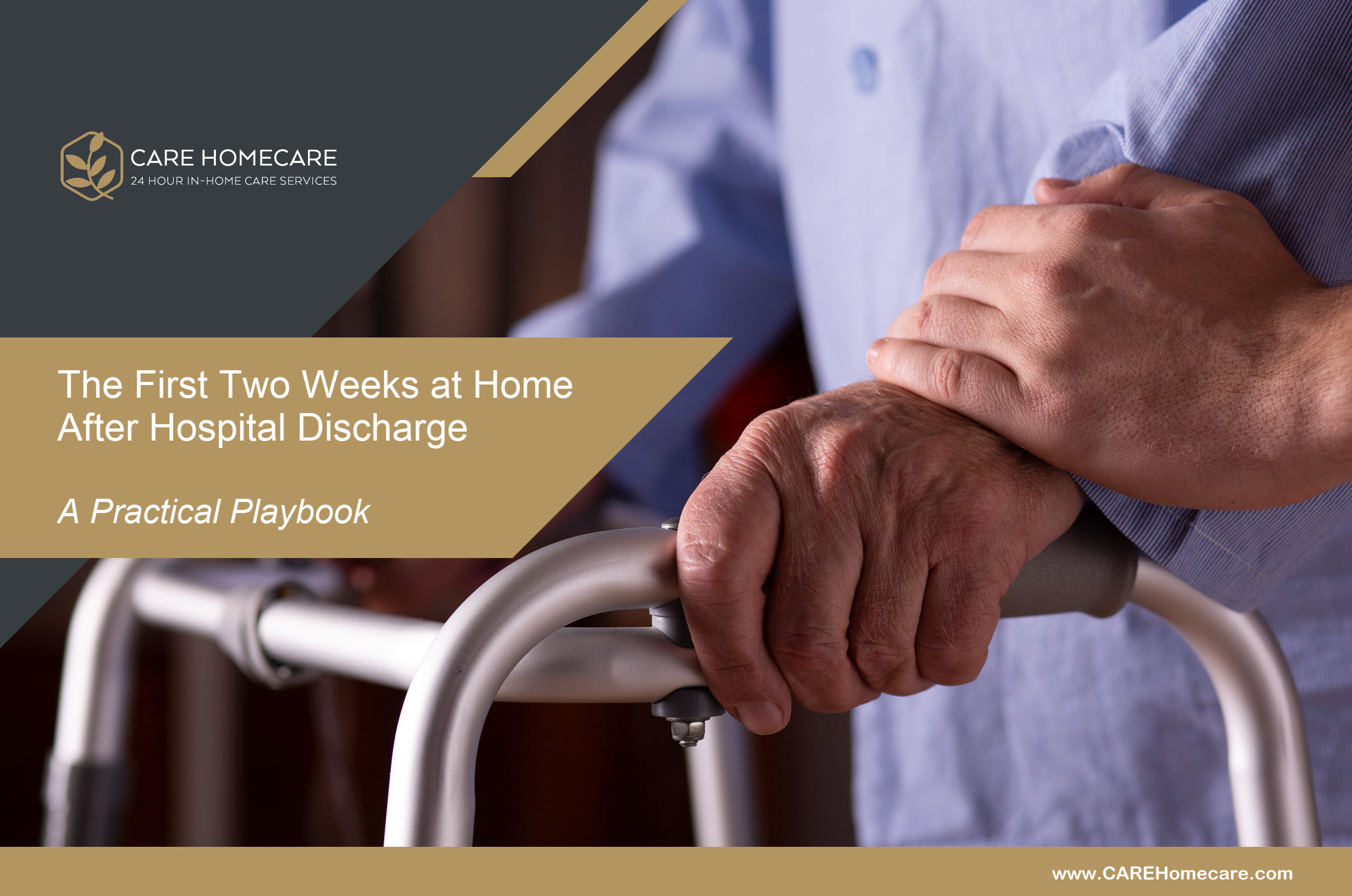
The First Two Weeks at Home After Hospital Discharge
A Practical Playbook
Leaving the hospital can feel like crossing the finish line. Doctors say you are medically stable. Nurses hand you discharge instructions. Then suddenly you are home, facing the reality of recovery without the 24-hour safety net of hospital care. For most patients the first two weeks after discharge are the hardest with the first 72 hours being the most challenging. The body is weak, the mind is foggy, and families are scrambling to manage care while holding their own lives together.
At CARE Homecare, we specialize in guiding families through this fragile window. We know that the decisions made in these first days determine whether recovery is smooth or whether complications send a loved one back to the hospital.
If you or a loved one are getting ready to be discharged from the hospital, download our free hospital discharge checklist in PDF or editable doc format to help make the transition easier.
Key Takeaways
- The first two weeks after hospital discharge are the most vulnerable for setbacks and readmission
- Patients need stability, routine, and consistent monitoring during this period
- Family caregivers often struggle to provide adequate support without burning out
- Professional caregivers reduce risks, improve recovery outcomes, and support long-term independence
Looking for Home Care Support in Southern California?
CARE Homecare offers hourly and 24-hour in-home care services across LA and Orange Counties.
Speak with one of our home care specialists today.
Why the first two weeks matter
Research consistently shows the highest risk of unplanned hospital readmission occurs within the first 14 days after discharge. According to the Centers for Medicare and Medicaid Services, nearly one in five Medicare patients are readmitted within 30 days, and the majority of those readmissions happen early in the process.
Why does this happen so often. The hospital environment is structured and supportive. Patients are monitored constantly. Meals arrive at scheduled times. Nurses administer medications with precision. Once at home the structure disappears. Families juggle complex medication schedules, mobility support, and emotional caregiving without training. Even minor oversights can spiral into major complications.
For example, a patient discharged after pneumonia may skip antibiotics because they feel better, only to relapse. Someone with limited mobility may fall in the bathroom on day three. A family member working full time may forget a follow-up appointment. Each scenario increases the risk of setbacks. This is why professional home care in Los Angeles makes such a difference. Trained caregivers bridge the gap from the planning phase prior to hospital discharge to independence.
The emotional reality for families
What discharge planners call “safe discharge” rarely feels safe to families. Loved ones are sent home with a stack of papers filled with medical terms, medication lists, and appointment schedules. Many caregivers describe the experience as overwhelming.
In these moments families often feel two conflicting emotions. Relief that their loved one is leaving the hospital, and fear that they cannot provide the level of care needed. When those feelings collide, stress levels skyrocket. Sleep is interrupted, routines are thrown off, and family caregivers quickly burn out.
This stress is why so many families turn to professional caregivers during the first two weeks. Having skilled support at home reduces pressure on the family and reassures the patient that they are not a burden.

Days one to three – stabilizing at home
The first three days are all about transition. The patient is adjusting to a less structured environment. Families are adjusting to the reality of caregiving.
In this phase the focus should be on stability. Patients often return home physically weak, sometimes disoriented, and emotionally drained. Even walking across the room can feel exhausting. Preparing meals, managing medications, and using the restroom may require support.
Professional caregivers step in to handle medication reminders, meal preparation, mobility assistance, and personal hygiene. They also help identify hazards in the home such as loose rugs or cluttered walkways. Families often underestimate how much energy it takes just to keep a safe environment. With support, these first few days become less overwhelming and more manageable.
Days four to seven – establishing a routine
By the end of the first week the patient and family begin to recognize patterns. Fatigue may set in. Small victories, like walking to the kitchen or eating without help, feel huge. At the same time, setbacks like dizziness, pain, or confusion can shake confidence.
This is the point where routines matter most. Consistent sleep schedules, regular meals, and medication adherence are critical. Caregivers provide hands-on help to keep these routines intact. They also serve as companions, offering encouragement and emotional support. For families who are juggling work and caregiving responsibilities, this consistency is often impossible without outside help.
Follow-up appointments usually fall in this window. A caregiver can provide transportation and advocacy, ensuring the doctor’s instructions are understood and applied at home. Without that support, families often miss details that affect long-term recovery.
Days eight to fourteen – evaluating long-term needs
The second week shows whether the patient is gaining independence or still requires significant assistance. Some begin walking with confidence and managing medications independently. Others struggle with ongoing fatigue, confusion, or complications.
This is the time to reassess. Does the patient need ongoing professional care. Can family members sustain the level of support required. Are there risks of falls, missed medications, or unmanaged symptoms.
Professional caregivers help families answer these questions objectively. They can track progress, document challenges, and communicate observations to healthcare providers. At CARE Homecare, we often work with families during this phase to decide whether part-time, full-time, or 24-hour home care services are the best fit moving forward.
Many families assume they can handle the transition without professional help. The reality is that caregiving has both visible and hidden costs. Financially, time away from work, missed shifts, or reduced hours add up quickly. Emotionally, stress and fatigue strain relationships. Physically, caregivers risk injury while lifting or assisting their loved one.
Professional care prevents these costs from piling up. Trained caregivers not only support the patient but also protect the family’s well-being. This balance leads to better recovery outcomes and lower overall costs compared to repeat hospitalizations. For families concerned about pricing, our detailed guide to home care costs explains what to expect and how services can be tailored to fit different budgets.
Coordinating with healthcare providers
One of the biggest challenges in the first two weeks is coordinating care. Hospitals discharge patients with follow-up appointments, therapy referrals, and medication changes. Families often lose track of details in the shuffle.
Caregivers act as a bridge between home and healthcare providers. They can accompany patients to appointments, take notes, and ensure instructions are followed. This coordination prevents gaps in care that often lead to complications.
What happens without support
Families often try to manage without help, thinking they can power through. Unfortunately the statistics are clear. Without support many patients end up back in the hospital within weeks. Missed medications, untreated wounds, and falls are the most common causes.
By contrast, families who bring in professional post-hospital care home support report lower stress, fewer complications, and higher patient satisfaction. The difference is not just medical. It is emotional. Patients feel cared for and families feel supported.
24 Hour Home Care in Los Angeles by CARE Homecare
Recovery does not end at the hospital door. It begins at home, in the quiet moments when routines are rebuilt and confidence is regained. With the right plan and the right support, families can transform those fragile first two weeks into a foundation for lasting health.
If your loved one is preparing to leave the hospital, talk with CARE Homecare about 24-hour home care in Los Angeles. Our caregivers are trained to provide safety, comfort, and peace of mind during this critical transition.

For further information on recovery after hospitalization, visit Medicare.gov and the National Institute on Aging.
 https://carehomecare.com/wp-content/uploads/2026/05/Post-Surgery-Home-Care-Checklist-Non-Medical-Support-for-Recovery-at-Home-Free-PDF-and-Word-Download.jpg
839
1315
Moti Gamburd
https://a81019caredemo.wpengine.com/wp-content/uploads/2019/08/CARE-Homecare-Logo-wht.png
Moti Gamburd2026-05-14 20:03:392026-05-14 20:03:39Free Post-Surgery Home Care Checklist | Non-Medical Support for Recovery at Home | PDF or Word Print or Download
https://carehomecare.com/wp-content/uploads/2026/05/Post-Surgery-Home-Care-Checklist-Non-Medical-Support-for-Recovery-at-Home-Free-PDF-and-Word-Download.jpg
839
1315
Moti Gamburd
https://a81019caredemo.wpengine.com/wp-content/uploads/2019/08/CARE-Homecare-Logo-wht.png
Moti Gamburd2026-05-14 20:03:392026-05-14 20:03:39Free Post-Surgery Home Care Checklist | Non-Medical Support for Recovery at Home | PDF or Word Print or Download https://carehomecare.com/wp-content/uploads/2026/05/Home-Care-Supplies-Preparation-Checklist.jpg
842
1316
Moti Gamburd
https://a81019caredemo.wpengine.com/wp-content/uploads/2019/08/CARE-Homecare-Logo-wht.png
Moti Gamburd2026-05-14 18:49:452026-05-14 18:49:45Home Care Supplies Checklist | What to Have Ready Before Care Starts | Free Printable PDF
https://carehomecare.com/wp-content/uploads/2026/05/Home-Care-Supplies-Preparation-Checklist.jpg
842
1316
Moti Gamburd
https://a81019caredemo.wpengine.com/wp-content/uploads/2019/08/CARE-Homecare-Logo-wht.png
Moti Gamburd2026-05-14 18:49:452026-05-14 18:49:45Home Care Supplies Checklist | What to Have Ready Before Care Starts | Free Printable PDF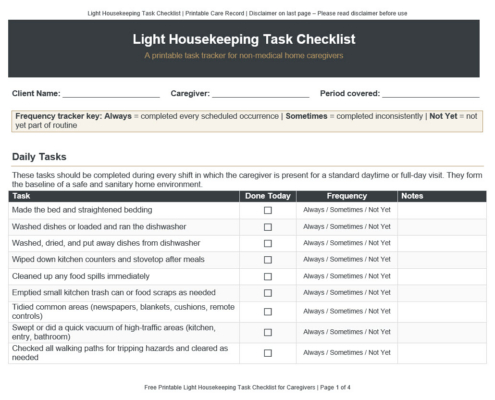 https://carehomecare.com/wp-content/uploads/2026/05/Light-Housekeeping-Checklist-for-Home-Caregivers-1.jpg
832
1080
Moti Gamburd
https://a81019caredemo.wpengine.com/wp-content/uploads/2019/08/CARE-Homecare-Logo-wht.png
Moti Gamburd2026-05-13 11:11:172026-05-14 02:13:21Light Housekeeping Checklist for Home Caregivers | Free Printable PDF
https://carehomecare.com/wp-content/uploads/2026/05/Light-Housekeeping-Checklist-for-Home-Caregivers-1.jpg
832
1080
Moti Gamburd
https://a81019caredemo.wpengine.com/wp-content/uploads/2019/08/CARE-Homecare-Logo-wht.png
Moti Gamburd2026-05-13 11:11:172026-05-14 02:13:21Light Housekeeping Checklist for Home Caregivers | Free Printable PDF https://carehomecare.com/wp-content/uploads/2026/05/Home-Safety-Checklist-for-Seniors-Free-Printable-Room-by-Room-Guide-PDF-Download.jpg
804
1042
Moti Gamburd
https://a81019caredemo.wpengine.com/wp-content/uploads/2019/08/CARE-Homecare-Logo-wht.png
Moti Gamburd2026-05-12 01:27:302026-05-13 02:09:16Home Safety Checklist for Seniors | Room by Room (Free Printable PDF)
https://carehomecare.com/wp-content/uploads/2026/05/Home-Safety-Checklist-for-Seniors-Free-Printable-Room-by-Room-Guide-PDF-Download.jpg
804
1042
Moti Gamburd
https://a81019caredemo.wpengine.com/wp-content/uploads/2019/08/CARE-Homecare-Logo-wht.png
Moti Gamburd2026-05-12 01:27:302026-05-13 02:09:16Home Safety Checklist for Seniors | Room by Room (Free Printable PDF) https://carehomecare.com/wp-content/uploads/2026/05/In-Home-Care-Agency-Checklist-Questions-to-Ask-Before-You-Hire.jpg
831
1078
Moti Gamburd
https://a81019caredemo.wpengine.com/wp-content/uploads/2019/08/CARE-Homecare-Logo-wht.png
Moti Gamburd2026-05-04 01:29:142026-05-13 02:07:13In-Home Care Agency Checklist | Questions to Ask Before You Hire
https://carehomecare.com/wp-content/uploads/2026/05/In-Home-Care-Agency-Checklist-Questions-to-Ask-Before-You-Hire.jpg
831
1078
Moti Gamburd
https://a81019caredemo.wpengine.com/wp-content/uploads/2019/08/CARE-Homecare-Logo-wht.png
Moti Gamburd2026-05-04 01:29:142026-05-13 02:07:13In-Home Care Agency Checklist | Questions to Ask Before You Hire https://carehomecare.com/wp-content/uploads/2026/05/Dementia-Daily-Caregiver-Checklist-Free-Printable-PDF-for-Home-Care.jpg
831
1078
Moti Gamburd
https://a81019caredemo.wpengine.com/wp-content/uploads/2019/08/CARE-Homecare-Logo-wht.png
Moti Gamburd2026-05-03 00:17:592026-05-13 02:09:49Dementia Daily Caregiver Checklist | Free Printable PDF for Home Care
https://carehomecare.com/wp-content/uploads/2026/05/Dementia-Daily-Caregiver-Checklist-Free-Printable-PDF-for-Home-Care.jpg
831
1078
Moti Gamburd
https://a81019caredemo.wpengine.com/wp-content/uploads/2019/08/CARE-Homecare-Logo-wht.png
Moti Gamburd2026-05-03 00:17:592026-05-13 02:09:49Dementia Daily Caregiver Checklist | Free Printable PDF for Home Care https://carehomecare.com/wp-content/uploads/2026/05/ADL-IADL-Checklist-for-Seniors-Free-Printable-Assessment-PDF-Download.jpg
795
1041
Moti Gamburd
https://a81019caredemo.wpengine.com/wp-content/uploads/2019/08/CARE-Homecare-Logo-wht.png
Moti Gamburd2026-05-01 17:41:202026-05-13 02:10:25ADL / IADL Checklist for Seniors - Free Printable Assessment (PDF Download)
https://carehomecare.com/wp-content/uploads/2026/05/ADL-IADL-Checklist-for-Seniors-Free-Printable-Assessment-PDF-Download.jpg
795
1041
Moti Gamburd
https://a81019caredemo.wpengine.com/wp-content/uploads/2019/08/CARE-Homecare-Logo-wht.png
Moti Gamburd2026-05-01 17:41:202026-05-13 02:10:25ADL / IADL Checklist for Seniors - Free Printable Assessment (PDF Download)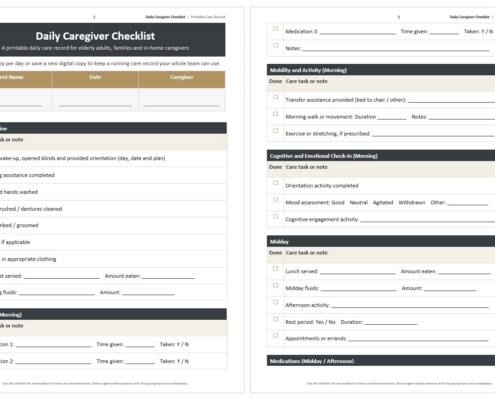 https://carehomecare.com/wp-content/uploads/2026/05/Free-Printable-Caregiver-Daily-Checklist-for-Elderly-PDF-Download.jpg
877
1352
Moti Gamburd
https://a81019caredemo.wpengine.com/wp-content/uploads/2019/08/CARE-Homecare-Logo-wht.png
Moti Gamburd2026-04-21 16:12:122026-05-14 02:01:30Free Printable Caregiver Daily Checklist for Elderly (PDF Download)
https://carehomecare.com/wp-content/uploads/2026/05/Free-Printable-Caregiver-Daily-Checklist-for-Elderly-PDF-Download.jpg
877
1352
Moti Gamburd
https://a81019caredemo.wpengine.com/wp-content/uploads/2019/08/CARE-Homecare-Logo-wht.png
Moti Gamburd2026-04-21 16:12:122026-05-14 02:01:30Free Printable Caregiver Daily Checklist for Elderly (PDF Download) https://carehomecare.com/wp-content/uploads/2026/03/24-7-vs-12-Hour-Shifts-for-Home-Care.jpg
1706
2553
Mendy Perlman
https://a81019caredemo.wpengine.com/wp-content/uploads/2019/08/CARE-Homecare-Logo-wht.png
Mendy Perlman2026-03-14 03:46:542026-03-15 03:52:2924/7 vs 12-Hour Shifts for Home Care - Coverage Models to Compare
https://carehomecare.com/wp-content/uploads/2026/03/24-7-vs-12-Hour-Shifts-for-Home-Care.jpg
1706
2553
Mendy Perlman
https://a81019caredemo.wpengine.com/wp-content/uploads/2019/08/CARE-Homecare-Logo-wht.png
Mendy Perlman2026-03-14 03:46:542026-03-15 03:52:2924/7 vs 12-Hour Shifts for Home Care - Coverage Models to Compare
