
Contents
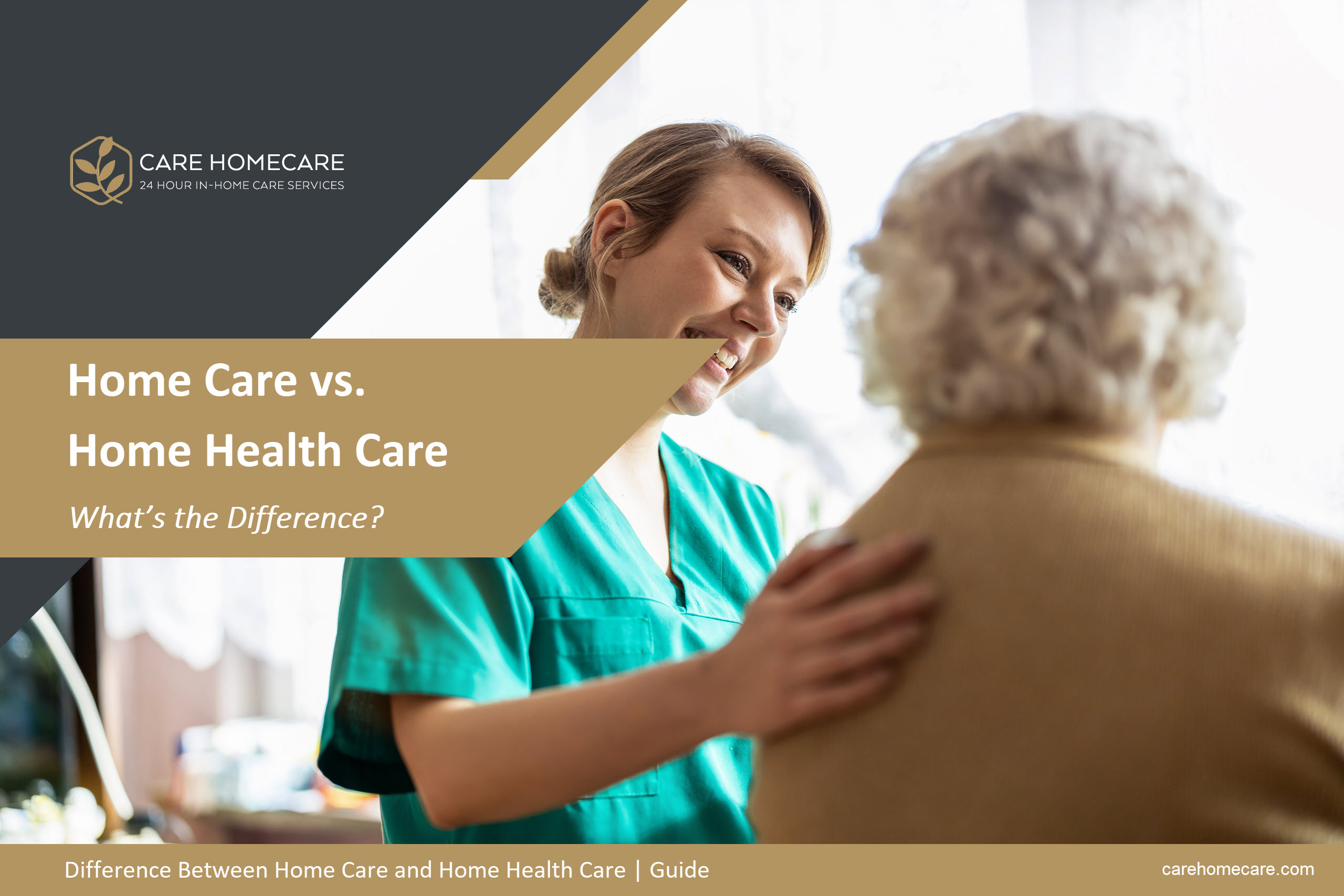
Home Care vs. Home Health Care – What’s the Difference?
Key Takeaways
- The difference between home care and home health care lies mainly in the type of support provided. Home care vs home health care often comes down to whether skilled medical treatment or non-medical assistance is needed.
- Home health care services include clinical treatments such as wound care, pain management, and skilled nursing. These services usually require a physician’s prescription and may be covered by Medicare, Medicaid, or private insurance.
- Home care services definition focuses on helping with activities of daily living, such as bathing, dressing, meal preparation, and companionship. This support is typically paid out of pocket or by long-term care insurance.
- If you are comparing home health care vs home care, consider both the frequency and duration of care. Home health care is often short-term and goal-oriented, while home care can continue indefinitely.
- Some families choose to combine both options, using home health care services for medical needs while arranging in home care for personal support and household tasks.
- When researching providers, make sure to ask questions about licensing, training requirements, and whether they meet your criteria for either non skilled home health care or skilled care.
- To better understand your options, you can define your priorities by asking, “What is home health care?” and “What does home care mean?” This clarity can guide your decisions about coverage, eligibility, and cost.
- Learning the home health care definition and exploring reputable agencies can help you feel confident about your choice.
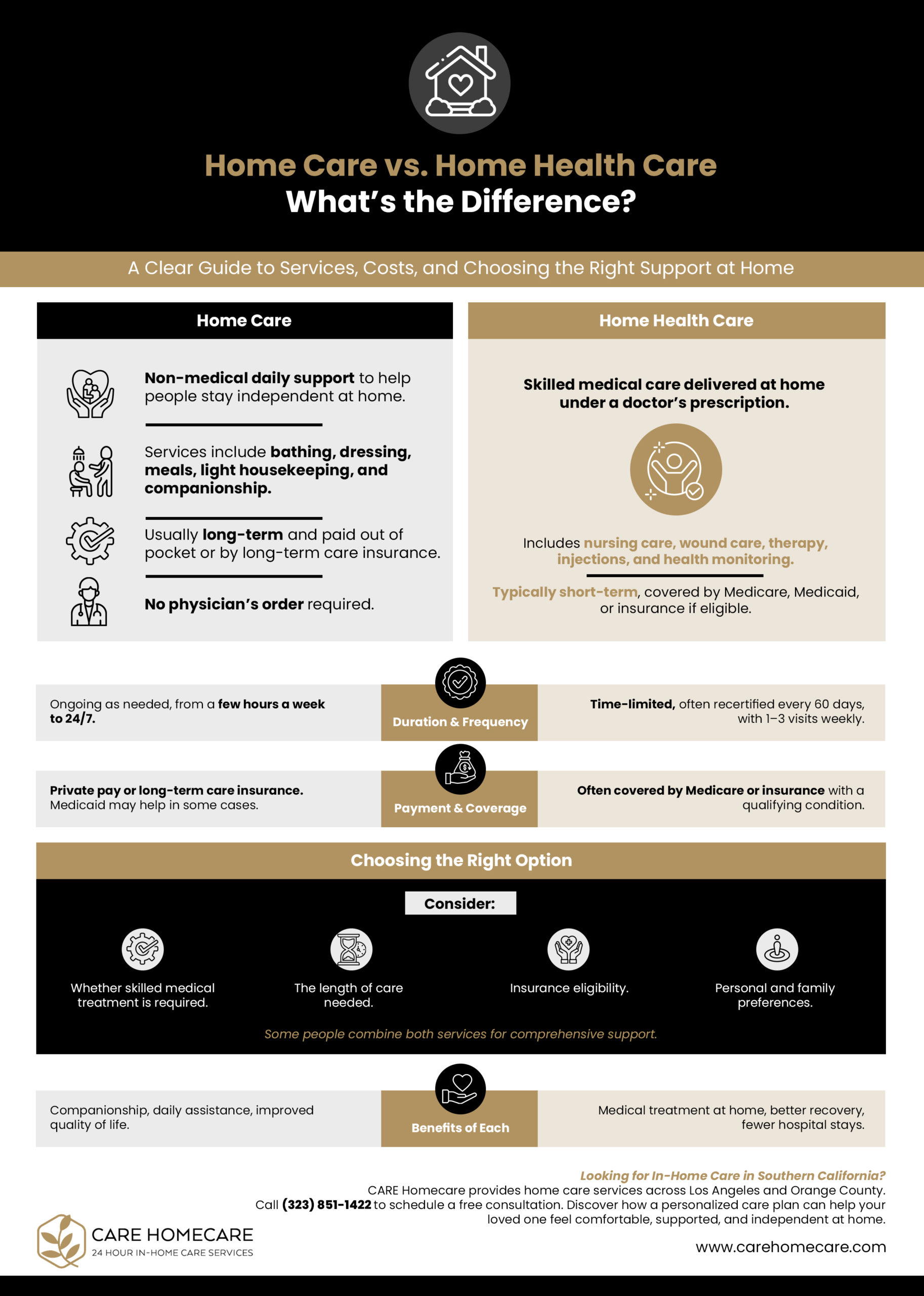
Table: Comparing Home Care and Home Health Care
| Category | Home Care | Home Health Care |
|---|---|---|
| Definition | Non-medical assistance with daily living activities | Skilled medical services prescribed by a physician |
| Typical Services | Bathing, dressing, grooming, meal preparation, companionship, housekeeping | Nursing care, wound care, IV therapy, physical/occupational/speech therapy, health monitoring |
| Who Provides Care | Personal care aides, home care aides, companions | Registered nurses (RNs), licensed practical nurses (LPNs), therapists, medical social workers |
| Duration of Care | Long-term or indefinite, depending on needs and budget | Short-term, based on physician orders and progress (often certified every 60 days) |
| Frequency of Visits | Hourly, daily, or 24/7 | Often 1–3 visits per week, depending on the care plan |
| Insurance Coverage | Typically paid out of pocket or by long-term care insurance; Medicaid covers some services | Medicare, Medicaid, and private insurance usually cover when eligibility criteria are met |
| Eligibility Requirements | No physician referral needed | Must be ordered by a doctor; patient must meet Medicare/insurance criteria (e.g., homebound status) |
| Emotional & Social Benefits | Companionship, reduced isolation, support with independence | Health monitoring can prevent rehospitalization; less focus on social aspects |
| Licensing & Credentials | State-regulated; certification requirements vary (some agencies require formal training) | Licensed clinical professionals required |
| Examples of Skilled Tasks | Not applicable (non-medical support only) | Injections, IV medications, wound care, pain management, therapy |
Understanding the distinction between home care and home health care can make an enormous difference for individuals and families exploring care options.
While the terms are often used interchangeably, each describes a unique type of support delivered in the home.
This guide explores what sets them apart, how services are provided, and how to decide which approach fits your circumstances best.

What Is Home Care?
Home care refers to non-medical assistance designed to help individuals remain safe and independent in their own homes. These services support daily living activities and often provide important companionship.
Examples of home care services include:
- Help with bathing, dressing, grooming, and toileting
- Meal preparation and assistance with eating
- Medication reminders (without administering medications)
- Light housekeeping and laundry
- Transportation to appointments or errands
- Companionship and social interaction
Home care is also sometimes called personal care, in-home care, or custodial care. It does not require a physician’s prescription. Many families arrange these services privately, though certain Medicaid programs or long-term care insurance plans may cover specific services.
To learn more about what home care is and how it works, visit our article called What Is In-Home Care?

What Is Home Health Care?
Home health care provides skilled medical services at home, delivered by licensed professionals. A physician’s order is required to initiate care, and the goal is typically to treat a short-term health issue or support recovery after surgery, illness, or injury.
Common home health care services include:
- Skilled nursing (monitoring vital signs, health assessments)
- Wound care and dressing changes
- Injections or intravenous (IV) medications
- Pain management
- Medical tests and health status evaluations
- Physical, occupational, or speech therapy
- Education for patients and caregivers about disease management
Home health care is sometimes referred to as skilled home health or medical home care. When eligibility criteria are met, it is usually covered by Medicare, Medicaid, or private health insurance.
If you want to review eligibility guidelines and covered services, visit Medicare’s Home Health Services page.

Duration and Frequency of Care
Home care is often long-term and can continue indefinitely based on your needs and budget. For example, an individual living with a chronic condition may arrange daily assistance for years.
Home health care is typically shorter-term. It is prescribed for a specific health episode, such as recovering from surgery or stabilizing after a hospital stay. Care is recertified periodically, often every 60 days, and continues as long as eligibility requirements are met.
Frequency also differs. Home health professionals usually visit a few times per week, while home care aides can provide support hourly, daily or even 24 hours per day.

Cost Comparison and Payment
Home care costs vary depending on the type and frequency of services. The national median cost for non-medical home care is about $30 per hour. Rates may be higher in regions with a higher cost of living. Most individuals pay privately, though long-term care insurance and Medicaid programs in some states can help cover expenses.
Home health care costs are often comparable to nursing home care, but many services are covered by Medicare or private insurance when medically necessary. Out-of-pocket costs depend on your insurance and the length of care.
Who Provides Each Type of Care?
Home care providers are trained aides or companions. Their training requirements can vary by state. For example, Medicaid-funded agencies often require aides to pass state certification tests. Some caregivers have additional training in dementia care or mobility assistance.
Home health care providers are licensed professionals such as:
- Registered Nurses (RNs)
- Licensed Practical Nurses (LPNs)
- Physical, Occupational, or Speech Therapists
- Medical Social Workers
These providers follow a care plan ordered by a physician and document your progress carefully.
Skilled vs. Non-Skilled Care
Home health care delivers skilled care, meaning clinical treatments or therapies performed by licensed clinicians. This includes wound care, IV medications, injections, and rehabilitative therapy.
Home care provides non-skilled care, focusing on personal assistance and daily activities that do not require a medical license. For example, a caregiver may help with grooming and offer medication reminders but cannot adjust dosages or administer injections.

Emotional and Social Benefits
While medical treatment is critical, emotional well-being plays an important role in recovery and quality of life.
Home care offers consistent companionship, which can ease loneliness and support mental health. Regular visits help maintain routines and provide reassurance to both patients and families.
Using Both Services Together
Many individuals benefit from combining home care and home health care. For example, a patient recovering from joint replacement surgery might receive home health care to manage pain, monitor healing, and complete physical therapy, while also arranging daily home care for meal preparation, light housekeeping, and personal hygiene assistance.
When services are combined, it is important to coordinate care plans to avoid confusion or duplicated services.
Choosing the Right Type of Care
Consider these factors as you evaluate which approach is appropriate:
- Does the individual require skilled clinical care or primarily help with daily activities?
- Medicare covers eligible home health care, but not standard home care.
- Decide whether you need short-term treatment or long-term assistance.
- Determine how important it is to remain at home full-time.
If you are unsure, talk to your physician or a licensed care coordinator to help define the right path.
Frequently Asked Questions
What is the main difference between home care and home health care?
Home care provides non-medical support like bathing, dressing, and companionship. Home health care includes skilled services such as nursing care and therapy ordered by a physician.
Who pays for home health care?
Medicare, Medicaid, and private insurance plans often cover home health care when criteria are met. Home care is usually paid privately, though some long-term care insurance plans help cover costs.
Can someone receive both services at the same time?
Yes. Many individuals combine home health care for clinical needs and home care for personal support and household help.
Are home health aides considered healthcare workers?
Yes. Home health aides delivering skilled care are licensed healthcare professionals. Non-medical aides providing personal care are not considered clinical providers, though they play an important role in maintaining independence.
Wrapping Up
Recognizing the difference between home care and home health care empowers you to build a plan that fits your health goals, budget, and preferences. Each service has a clear role in supporting well-being at home. To explore additional options or learn more, visit the National Institute on Aging for further information.
Local Care Options in Los Angeles and Orange County
Both home care and home health care services are available throughout Los Angeles and Orange County. Local providers can deliver flexible support, whether your loved one needs help with daily activities, skilled nursing care, or both.
CARE Homecare offers home care services that include all of Los Angeles and Orange Counties.
Home Care Support Services
If you’re exploring in-home care options in Los Angeles or Orange County, reach out to CARE Homecare today at (323) 851-1422 to schedule a free consultation. Our team can help you understand the difference between home care and home health care and find the right solution for your family’s needs.
 https://carehomecare.com/wp-content/uploads/2026/05/Post-Surgery-Home-Care-Checklist-Non-Medical-Support-for-Recovery-at-Home-Free-PDF-and-Word-Download.jpg
839
1315
Moti Gamburd
https://a81019caredemo.wpengine.com/wp-content/uploads/2019/08/CARE-Homecare-Logo-wht.png
Moti Gamburd2026-05-14 20:03:392026-05-14 20:03:39Free Post-Surgery Home Care Checklist | Non-Medical Support for Recovery at Home | PDF or Word Print or Download
https://carehomecare.com/wp-content/uploads/2026/05/Post-Surgery-Home-Care-Checklist-Non-Medical-Support-for-Recovery-at-Home-Free-PDF-and-Word-Download.jpg
839
1315
Moti Gamburd
https://a81019caredemo.wpengine.com/wp-content/uploads/2019/08/CARE-Homecare-Logo-wht.png
Moti Gamburd2026-05-14 20:03:392026-05-14 20:03:39Free Post-Surgery Home Care Checklist | Non-Medical Support for Recovery at Home | PDF or Word Print or Download https://carehomecare.com/wp-content/uploads/2026/05/Home-Care-Supplies-Preparation-Checklist.jpg
842
1316
Moti Gamburd
https://a81019caredemo.wpengine.com/wp-content/uploads/2019/08/CARE-Homecare-Logo-wht.png
Moti Gamburd2026-05-14 18:49:452026-05-14 18:49:45Home Care Supplies Checklist | What to Have Ready Before Care Starts | Free Printable PDF
https://carehomecare.com/wp-content/uploads/2026/05/Home-Care-Supplies-Preparation-Checklist.jpg
842
1316
Moti Gamburd
https://a81019caredemo.wpengine.com/wp-content/uploads/2019/08/CARE-Homecare-Logo-wht.png
Moti Gamburd2026-05-14 18:49:452026-05-14 18:49:45Home Care Supplies Checklist | What to Have Ready Before Care Starts | Free Printable PDF https://carehomecare.com/wp-content/uploads/2026/05/Light-Housekeeping-Checklist-for-Home-Caregivers-1.jpg
832
1080
Moti Gamburd
https://a81019caredemo.wpengine.com/wp-content/uploads/2019/08/CARE-Homecare-Logo-wht.png
Moti Gamburd2026-05-13 11:11:172026-05-14 02:13:21Light Housekeeping Checklist for Home Caregivers | Free Printable PDF
https://carehomecare.com/wp-content/uploads/2026/05/Light-Housekeeping-Checklist-for-Home-Caregivers-1.jpg
832
1080
Moti Gamburd
https://a81019caredemo.wpengine.com/wp-content/uploads/2019/08/CARE-Homecare-Logo-wht.png
Moti Gamburd2026-05-13 11:11:172026-05-14 02:13:21Light Housekeeping Checklist for Home Caregivers | Free Printable PDF https://carehomecare.com/wp-content/uploads/2026/05/Home-Safety-Checklist-for-Seniors-Free-Printable-Room-by-Room-Guide-PDF-Download.jpg
804
1042
Moti Gamburd
https://a81019caredemo.wpengine.com/wp-content/uploads/2019/08/CARE-Homecare-Logo-wht.png
Moti Gamburd2026-05-12 01:27:302026-05-13 02:09:16Home Safety Checklist for Seniors | Room by Room (Free Printable PDF)
https://carehomecare.com/wp-content/uploads/2026/05/Home-Safety-Checklist-for-Seniors-Free-Printable-Room-by-Room-Guide-PDF-Download.jpg
804
1042
Moti Gamburd
https://a81019caredemo.wpengine.com/wp-content/uploads/2019/08/CARE-Homecare-Logo-wht.png
Moti Gamburd2026-05-12 01:27:302026-05-13 02:09:16Home Safety Checklist for Seniors | Room by Room (Free Printable PDF) https://carehomecare.com/wp-content/uploads/2026/05/In-Home-Care-Agency-Checklist-Questions-to-Ask-Before-You-Hire.jpg
831
1078
Moti Gamburd
https://a81019caredemo.wpengine.com/wp-content/uploads/2019/08/CARE-Homecare-Logo-wht.png
Moti Gamburd2026-05-04 01:29:142026-05-13 02:07:13In-Home Care Agency Checklist | Questions to Ask Before You Hire
https://carehomecare.com/wp-content/uploads/2026/05/In-Home-Care-Agency-Checklist-Questions-to-Ask-Before-You-Hire.jpg
831
1078
Moti Gamburd
https://a81019caredemo.wpengine.com/wp-content/uploads/2019/08/CARE-Homecare-Logo-wht.png
Moti Gamburd2026-05-04 01:29:142026-05-13 02:07:13In-Home Care Agency Checklist | Questions to Ask Before You Hire https://carehomecare.com/wp-content/uploads/2026/05/Dementia-Daily-Caregiver-Checklist-Free-Printable-PDF-for-Home-Care.jpg
831
1078
Moti Gamburd
https://a81019caredemo.wpengine.com/wp-content/uploads/2019/08/CARE-Homecare-Logo-wht.png
Moti Gamburd2026-05-03 00:17:592026-05-13 02:09:49Dementia Daily Caregiver Checklist | Free Printable PDF for Home Care
https://carehomecare.com/wp-content/uploads/2026/05/Dementia-Daily-Caregiver-Checklist-Free-Printable-PDF-for-Home-Care.jpg
831
1078
Moti Gamburd
https://a81019caredemo.wpengine.com/wp-content/uploads/2019/08/CARE-Homecare-Logo-wht.png
Moti Gamburd2026-05-03 00:17:592026-05-13 02:09:49Dementia Daily Caregiver Checklist | Free Printable PDF for Home Care https://carehomecare.com/wp-content/uploads/2026/05/ADL-IADL-Checklist-for-Seniors-Free-Printable-Assessment-PDF-Download.jpg
795
1041
Moti Gamburd
https://a81019caredemo.wpengine.com/wp-content/uploads/2019/08/CARE-Homecare-Logo-wht.png
Moti Gamburd2026-05-01 17:41:202026-05-13 02:10:25ADL / IADL Checklist for Seniors - Free Printable Assessment (PDF Download)
https://carehomecare.com/wp-content/uploads/2026/05/ADL-IADL-Checklist-for-Seniors-Free-Printable-Assessment-PDF-Download.jpg
795
1041
Moti Gamburd
https://a81019caredemo.wpengine.com/wp-content/uploads/2019/08/CARE-Homecare-Logo-wht.png
Moti Gamburd2026-05-01 17:41:202026-05-13 02:10:25ADL / IADL Checklist for Seniors - Free Printable Assessment (PDF Download) https://carehomecare.com/wp-content/uploads/2026/05/Free-Printable-Caregiver-Daily-Checklist-for-Elderly-PDF-Download.jpg
877
1352
Moti Gamburd
https://a81019caredemo.wpengine.com/wp-content/uploads/2019/08/CARE-Homecare-Logo-wht.png
Moti Gamburd2026-04-21 16:12:122026-05-14 02:01:30Free Printable Caregiver Daily Checklist for Elderly (PDF Download)
https://carehomecare.com/wp-content/uploads/2026/05/Free-Printable-Caregiver-Daily-Checklist-for-Elderly-PDF-Download.jpg
877
1352
Moti Gamburd
https://a81019caredemo.wpengine.com/wp-content/uploads/2019/08/CARE-Homecare-Logo-wht.png
Moti Gamburd2026-04-21 16:12:122026-05-14 02:01:30Free Printable Caregiver Daily Checklist for Elderly (PDF Download) https://carehomecare.com/wp-content/uploads/2026/03/24-7-vs-12-Hour-Shifts-for-Home-Care.jpg
1706
2553
Mendy Perlman
https://a81019caredemo.wpengine.com/wp-content/uploads/2019/08/CARE-Homecare-Logo-wht.png
Mendy Perlman2026-03-14 03:46:542026-03-15 03:52:2924/7 vs 12-Hour Shifts for Home Care - Coverage Models to Compare
https://carehomecare.com/wp-content/uploads/2026/03/24-7-vs-12-Hour-Shifts-for-Home-Care.jpg
1706
2553
Mendy Perlman
https://a81019caredemo.wpengine.com/wp-content/uploads/2019/08/CARE-Homecare-Logo-wht.png
Mendy Perlman2026-03-14 03:46:542026-03-15 03:52:2924/7 vs 12-Hour Shifts for Home Care - Coverage Models to Compare
