
Contents
The Differences Between Caregivers, Home Health Aides, Home Care and Home Health Care
Key Takeaways
Choosing between a caregiver, home health aide, home care, and home health care depends on the level of medical need, training required, and insurance coverage.
- Caregivers focus on non-medical assistance. They help with daily activities such as bathing, dressing, meal preparation, and companionship. They do not perform clinical tasks and usually do not require certification. These services are typically paid out of pocket or through long-term care insurance.
- Home Health Aides provide both personal care and limited medical support under the supervision of a nurse or physician. Their responsibilities include monitoring vital signs, assisting with medication administration, dressing wounds, and helping with mobility. Certification and state-approved training are required, and some services may be covered by Medicaid or long-term care policies.
- Home Care is a broader term describing non-medical support provided in the home. It includes assistance with hygiene, household tasks, and transportation. Home care does not involve skilled nursing or physician-directed treatment and is most often privately funded.
- Home Health Care involves medical services prescribed by a physician. Licensed nurses and therapists deliver skilled nursing care, rehabilitation therapies, and medication management. Medicare, Medicaid, and private insurance often cover these services when eligibility criteria are met.
- Costs vary widely. Caregiving and home care typically average around $30 per hour. Home health aides cost more due to their clinical responsibilities. Full home health care is comparable to skilled nursing facility costs, especially if extensive therapy or daily nursing is required.
- Families should regularly reassess care needs, particularly if a loved one’s condition changes. Progressive illnesses like dementia often require a gradual shift from non-medical support to skilled medical care over time.
- Understanding training requirements, supervision, and payment options helps ensure care decisions align with medical needs, personal preferences, and financial circumstances.
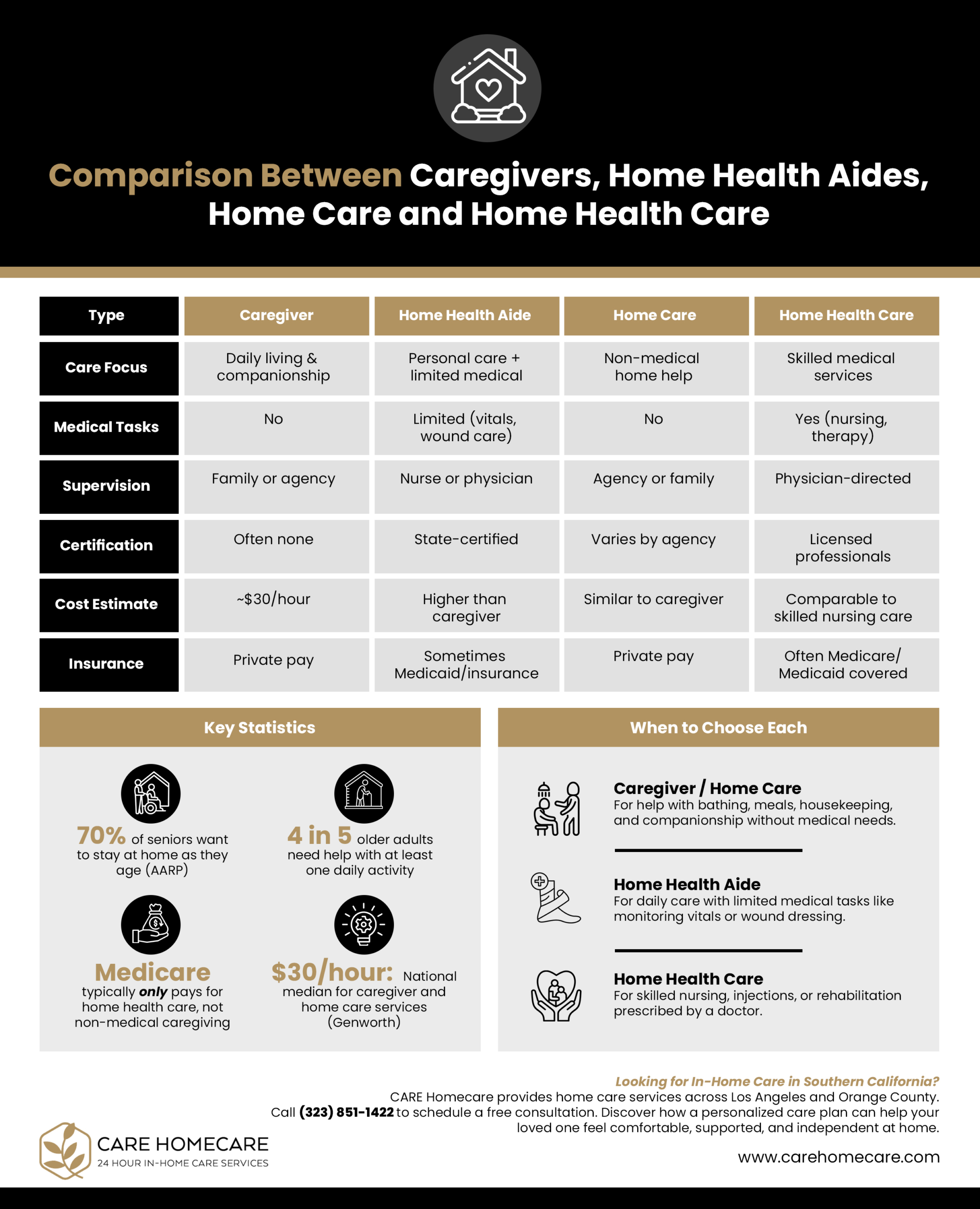
| Service Type | Personal Care | Medical Care | Physician Supervision | Certification |
|---|---|---|---|---|
| Caregiver | Yes | No | No | Often none required |
| Home Health Aide | Yes | Limited | Yes | State-approved training and exam |
| Home Care | Yes | No | No | Varies by agency |
| Home Health Care | Sometimes | Yes | Yes | Licensed professionals |
(Scroll Down for Detailed Comparison Table)
Selecting the right type of support at home requires clarity about the distinct roles, training, and services each option provides. Though terms like caregiver and home health aide are often used interchangeably, they are not the same. A clear understanding helps families arrange appropriate care that safeguards comfort, safety, and dignity.

What a Caregiver Provides
A caregiver focuses on non-medical support and companionship. This can include assistance with bathing, dressing, and grooming. Many older adults rely on caregivers to help with meal preparation and feeding, particularly when mobility or dexterity makes those activities challenging.
Caregivers often handle light housekeeping tasks to maintain a clean and organized home environment. Responsibilities can involve washing laundry, tidying rooms, or helping with dishes. These efforts allow the person receiving care to remain in familiar surroundings without compromising cleanliness or comfort.
Medication reminders are another routine aspect of caregiving. Although caregivers do not administer prescription drugs, they help ensure individuals take medications as directed by their physician.
Transportation is frequently part of the role. Many caregivers drive clients to medical appointments, the pharmacy, or the grocery store, supporting independence and reducing isolation.
Equally important is the emotional aspect of care. Companionship and social engagement can significantly improve mood and mental health, especially for individuals who live alone.

The Role of a Home Health Aide
A home health aide provides personal care similar to a caregiver but adds a level of clinical support under the direction of a nurse or physician.
Vital sign monitoring is a regular responsibility. Home health aides track measurements such as blood pressure, pulse, and temperature to identify changes that may require medical attention.
Medication assistance goes beyond reminders. While they do not prescribe, aides can help administer medications that have been set up by a nurse or pharmacist.
Wound care is often part of the job, particularly when a person is recovering from surgery or has a chronic condition that affects skin integrity. Home health aides clean and dress wounds according to instructions from healthcare professionals.
Mobility support is another essential component. Aides assist with safe transfers between beds and chairs, guide physical exercises to maintain strength, and help prevent falls.
For individuals who require catheter care or monitoring of chronic conditions, a home health aide bridges the gap between basic personal care and skilled nursing.
How Home Care Works
“Home care” is a broad term for non-medical assistance that allows older adults or individuals with disabilities to remain safely in their residence. The support can include personal hygiene help, meal preparation, and household chores.
While some families hire independent caregivers, many prefer working through agencies that screen and train staff. This approach can offer peace of mind regarding background checks, insurance coverage, and reliability.
Home care is suitable for individuals who are largely independent but benefit from routine assistance with daily activities. Unlike home health care, this option does not involve physician-prescribed treatments or licensed nursing services.

What Home Health Care Involves
Home health care is prescribed by a physician and delivered by licensed professionals such as registered nurses, licensed practical nurses, and rehabilitation therapists.
These services often include skilled nursing care like managing IV medications, dressing complex wounds, or monitoring health conditions that require frequent assessment.
Medication administration is a key difference compared to home care. A nurse or licensed aide ensures that prescriptions are given correctly and that any side effects are documented and reported.
Many individuals recovering from surgery or managing chronic illnesses benefit from therapy services delivered at home. Physical therapists guide exercises to regain strength and mobility. Occupational therapists help individuals adapt their home and daily habits to compensate for limitations. Speech therapists may address swallowing or communication issues.
Home health care requires a plan of care approved by a physician, and services are generally time-limited based on recovery goals and insurance eligibility. The Medicare Home Health Services page explains these guidelines in detail.
Training and Licensing Requirements
Caregivers typically do not need formal licensing. Agencies may offer basic training in personal care, safety protocols, and communication. Independent caregivers rely on experience, informal instruction, and in some cases, voluntary certification.
Home health aides complete state-approved training programs. These courses include classroom instruction and hands-on practice in areas such as infection control, nutrition, patient transfers, and emergency procedures. After training, aides must pass a competency exam and may need ongoing continuing education to maintain certification.
Home health care providers hold nursing or therapy licenses. Registered nurses (RNs) and licensed practical nurses (LPNs) must complete accredited education programs and pass national licensing exams. Therapists are similarly credentialed in their specialty.

Cost and Payment Options
Caregiving and home care services are often billed hourly. The national median cost is approximately $30 per hour, though this varies with location and the level of care required. Because these services are typically non-medical, families usually pay out of pocket or use long-term care insurance.
Home health aides have higher rates due to their additional training and medical responsibilities. Services from nurses and therapists under a home health care plan are comparable to skilled nursing facility care.
Insurance can ease the cost burden. Medicare and Medicaid often cover home health care if eligibility criteria are met. Private insurance plans and Veterans Affairs benefits may also contribute to expenses.

Choosing the Right Care for Your Situation
Assessing a loved one’s needs is the first step. If they can manage most activities independently but need help staying safe and comfortable, non-medical home care or a caregiver may be sufficient.
When chronic illness, mobility challenges, or recovery from surgery require skilled observation or treatment, home health aides or full home health care services provide professional support.
The choice is often influenced by insurance eligibility, personal preference, and the level of medical oversight required.
Evaluating and Adjusting Care Over Time
Care needs can change quickly. A person recovering from an injury may regain independence, reducing the need for professional support. In progressive conditions such as dementia, care requirements typically grow more complex.
It helps to review care plans every few months in consultation with healthcare providers and consider feedback from the person receiving care.
Caregiver vs. Home Health Aide vs. Home Care vs. Home Health Care
| Category | Caregiver | Home Health Aide | Home Care | Home Health Care |
|---|---|---|---|---|
| Scope of Services | Non-medical support, daily living assistance, companionship, light housekeeping, meal preparation, medication reminders, transportation | Personal care plus basic medical tasks: monitoring vital signs, wound care, medication assistance, catheter care, mobility exercises | Non-medical daily living assistance, similar to caregiver services, delivered via agency or independent providers | Physician-directed medical care: skilled nursing, IV medication, injections, complex wound care, therapy services (physical, occupational, speech) |
| Typical Providers | Family members or paid companions, sometimes hired through an agency | Certified professionals employed by licensed home health agencies | Agencies providing trained aides or companions, or independent caregivers | Licensed registered nurses, LPNs, certified therapists, sometimes supported by aides |
| Medical Care | None | Limited medical support under supervision (e.g., dressing changes, medication administration pre-dosed by RN, vital sign tracking) | None | Full medical care as prescribed by a physician, including treatments requiring clinical credentials |
| Certification/Training | Often none required, though reputable agencies may train in safety and personal care | State-approved training program completion, competency exam, possible ongoing education | Varies by agency, typically no formal licensing | Licensed professionals: RNs, LPNs, therapists, all with accredited training and state licensure |
| Supervision | Typically unsupervised or supervised by the family | Supervised by a nurse or physician | Supervised by agency managers or families | Supervised under a physician’s care plan, with clinical oversight |
| Medication Role | Reminders only, no administration | Can assist with administration of medications set up by a nurse or pharmacist | Reminders only, no administration | Full medication administration, including injections and IV therapy |
| Vital Sign Monitoring | No | Yes, including documentation and communication of changes | No | Yes, performed by nurses or under nurse supervision |
| Wound Care | No | Yes, cleaning and dressing wounds as directed | No | Yes, including complex wound management |
| Mobility Support | Assistance with transfers and ambulation | Assistance with transfers, physical therapy exercises as instructed | Assistance with transfers and positioning | Full mobility assistance, including rehabilitation therapy |
| Personal Care | Bathing, dressing, grooming | Bathing, dressing, grooming, plus some clinical personal care | Bathing, dressing, grooming | Sometimes included, but primarily focused on medical treatments |
| Meal Preparation | Yes | Yes | Yes | Sometimes, if part of recovery plan |
| Transportation | Yes | Sometimes, depending on agency policy | Yes | Rarely provided; focus is on medical treatment |
| Insurance Coverage | Usually private pay or long-term care insurance | Sometimes covered by Medicaid waivers or long-term care insurance | Usually private pay or long-term care insurance | Often covered by Medicare, Medicaid, and private health insurance if eligibility and medical necessity criteria are met |
| Cost (Typical) | ~$30/hour national median (varies by state and agency) | Higher than caregiver costs due to training and clinical tasks | Similar to caregiver costs, varies by agency | Comparable to skilled nursing facility care; costs depend on frequency and insurance coverage |
| Physician Prescription Required | No | Often yes, particularly if insurance-covered | No | Yes, always requires physician order |
| Best For | Individuals who need help with daily activities, companionship, and light support | Individuals needing help with personal care and some limited medical assistance | Individuals who are largely independent but benefit from help with chores and hygiene | Individuals requiring skilled nursing care, rehabilitation therapies, or complex medical monitoring at home |
| Emotional Support | A major component; companionship and mental well-being are central | Included, but emphasis is on physical care and safety | Included, similar to caregiver focus | Secondary to medical treatment; may be provided by nurses and therapists but less of a core focus |
| Regulatory Oversight | Limited regulation unless employed through a licensed agency | Regulated by state health departments and Medicaid/Medicare guidelines | Varies widely by state and agency | Highly regulated under Medicare Conditions of Participation and state licensure requirements |
Local Care Options in Los Angeles and Orange County
Both 24-hour in-home care and live-in care services are widely available throughout Los Angeles and Orange County. Local agencies are equipped to provide flexible, community-focused support tailored to individual needs.
Intensive In-Home Support Services
If you’re considering 24-hour or live-in care for your loved one in Los Angeles or Orange County, contact CARE Homecare today at (323) 851-1422 to schedule a free consultation. Let us help you make the best choice for their comfort and well-being.
 https://carehomecare.com/wp-content/uploads/2026/05/Post-Surgery-Home-Care-Checklist-Non-Medical-Support-for-Recovery-at-Home-Free-PDF-and-Word-Download.jpg
839
1315
Moti Gamburd
https://a81019caredemo.wpengine.com/wp-content/uploads/2019/08/CARE-Homecare-Logo-wht.png
Moti Gamburd2026-05-14 20:03:392026-05-14 20:03:39Free Post-Surgery Home Care Checklist | Non-Medical Support for Recovery at Home | PDF or Word Print or Download
https://carehomecare.com/wp-content/uploads/2026/05/Post-Surgery-Home-Care-Checklist-Non-Medical-Support-for-Recovery-at-Home-Free-PDF-and-Word-Download.jpg
839
1315
Moti Gamburd
https://a81019caredemo.wpengine.com/wp-content/uploads/2019/08/CARE-Homecare-Logo-wht.png
Moti Gamburd2026-05-14 20:03:392026-05-14 20:03:39Free Post-Surgery Home Care Checklist | Non-Medical Support for Recovery at Home | PDF or Word Print or Download https://carehomecare.com/wp-content/uploads/2026/05/Home-Care-Supplies-Preparation-Checklist.jpg
842
1316
Moti Gamburd
https://a81019caredemo.wpengine.com/wp-content/uploads/2019/08/CARE-Homecare-Logo-wht.png
Moti Gamburd2026-05-14 18:49:452026-05-14 18:49:45Home Care Supplies Checklist | What to Have Ready Before Care Starts | Free Printable PDF
https://carehomecare.com/wp-content/uploads/2026/05/Home-Care-Supplies-Preparation-Checklist.jpg
842
1316
Moti Gamburd
https://a81019caredemo.wpengine.com/wp-content/uploads/2019/08/CARE-Homecare-Logo-wht.png
Moti Gamburd2026-05-14 18:49:452026-05-14 18:49:45Home Care Supplies Checklist | What to Have Ready Before Care Starts | Free Printable PDF https://carehomecare.com/wp-content/uploads/2026/05/Light-Housekeeping-Checklist-for-Home-Caregivers-1.jpg
832
1080
Moti Gamburd
https://a81019caredemo.wpengine.com/wp-content/uploads/2019/08/CARE-Homecare-Logo-wht.png
Moti Gamburd2026-05-13 11:11:172026-05-14 02:13:21Light Housekeeping Checklist for Home Caregivers | Free Printable PDF
https://carehomecare.com/wp-content/uploads/2026/05/Light-Housekeeping-Checklist-for-Home-Caregivers-1.jpg
832
1080
Moti Gamburd
https://a81019caredemo.wpengine.com/wp-content/uploads/2019/08/CARE-Homecare-Logo-wht.png
Moti Gamburd2026-05-13 11:11:172026-05-14 02:13:21Light Housekeeping Checklist for Home Caregivers | Free Printable PDF https://carehomecare.com/wp-content/uploads/2026/05/Home-Safety-Checklist-for-Seniors-Free-Printable-Room-by-Room-Guide-PDF-Download.jpg
804
1042
Moti Gamburd
https://a81019caredemo.wpengine.com/wp-content/uploads/2019/08/CARE-Homecare-Logo-wht.png
Moti Gamburd2026-05-12 01:27:302026-05-13 02:09:16Home Safety Checklist for Seniors | Room by Room (Free Printable PDF)
https://carehomecare.com/wp-content/uploads/2026/05/Home-Safety-Checklist-for-Seniors-Free-Printable-Room-by-Room-Guide-PDF-Download.jpg
804
1042
Moti Gamburd
https://a81019caredemo.wpengine.com/wp-content/uploads/2019/08/CARE-Homecare-Logo-wht.png
Moti Gamburd2026-05-12 01:27:302026-05-13 02:09:16Home Safety Checklist for Seniors | Room by Room (Free Printable PDF) https://carehomecare.com/wp-content/uploads/2026/05/In-Home-Care-Agency-Checklist-Questions-to-Ask-Before-You-Hire.jpg
831
1078
Moti Gamburd
https://a81019caredemo.wpengine.com/wp-content/uploads/2019/08/CARE-Homecare-Logo-wht.png
Moti Gamburd2026-05-04 01:29:142026-05-13 02:07:13In-Home Care Agency Checklist | Questions to Ask Before You Hire
https://carehomecare.com/wp-content/uploads/2026/05/In-Home-Care-Agency-Checklist-Questions-to-Ask-Before-You-Hire.jpg
831
1078
Moti Gamburd
https://a81019caredemo.wpengine.com/wp-content/uploads/2019/08/CARE-Homecare-Logo-wht.png
Moti Gamburd2026-05-04 01:29:142026-05-13 02:07:13In-Home Care Agency Checklist | Questions to Ask Before You Hire https://carehomecare.com/wp-content/uploads/2026/05/Dementia-Daily-Caregiver-Checklist-Free-Printable-PDF-for-Home-Care.jpg
831
1078
Moti Gamburd
https://a81019caredemo.wpengine.com/wp-content/uploads/2019/08/CARE-Homecare-Logo-wht.png
Moti Gamburd2026-05-03 00:17:592026-05-13 02:09:49Dementia Daily Caregiver Checklist | Free Printable PDF for Home Care
https://carehomecare.com/wp-content/uploads/2026/05/Dementia-Daily-Caregiver-Checklist-Free-Printable-PDF-for-Home-Care.jpg
831
1078
Moti Gamburd
https://a81019caredemo.wpengine.com/wp-content/uploads/2019/08/CARE-Homecare-Logo-wht.png
Moti Gamburd2026-05-03 00:17:592026-05-13 02:09:49Dementia Daily Caregiver Checklist | Free Printable PDF for Home Care https://carehomecare.com/wp-content/uploads/2026/05/ADL-IADL-Checklist-for-Seniors-Free-Printable-Assessment-PDF-Download.jpg
795
1041
Moti Gamburd
https://a81019caredemo.wpengine.com/wp-content/uploads/2019/08/CARE-Homecare-Logo-wht.png
Moti Gamburd2026-05-01 17:41:202026-05-13 02:10:25ADL / IADL Checklist for Seniors - Free Printable Assessment (PDF Download)
https://carehomecare.com/wp-content/uploads/2026/05/ADL-IADL-Checklist-for-Seniors-Free-Printable-Assessment-PDF-Download.jpg
795
1041
Moti Gamburd
https://a81019caredemo.wpengine.com/wp-content/uploads/2019/08/CARE-Homecare-Logo-wht.png
Moti Gamburd2026-05-01 17:41:202026-05-13 02:10:25ADL / IADL Checklist for Seniors - Free Printable Assessment (PDF Download) https://carehomecare.com/wp-content/uploads/2026/05/Free-Printable-Caregiver-Daily-Checklist-for-Elderly-PDF-Download.jpg
877
1352
Moti Gamburd
https://a81019caredemo.wpengine.com/wp-content/uploads/2019/08/CARE-Homecare-Logo-wht.png
Moti Gamburd2026-04-21 16:12:122026-05-14 02:01:30Free Printable Caregiver Daily Checklist for Elderly (PDF Download)
https://carehomecare.com/wp-content/uploads/2026/05/Free-Printable-Caregiver-Daily-Checklist-for-Elderly-PDF-Download.jpg
877
1352
Moti Gamburd
https://a81019caredemo.wpengine.com/wp-content/uploads/2019/08/CARE-Homecare-Logo-wht.png
Moti Gamburd2026-04-21 16:12:122026-05-14 02:01:30Free Printable Caregiver Daily Checklist for Elderly (PDF Download) https://carehomecare.com/wp-content/uploads/2026/03/24-7-vs-12-Hour-Shifts-for-Home-Care.jpg
1706
2553
Mendy Perlman
https://a81019caredemo.wpengine.com/wp-content/uploads/2019/08/CARE-Homecare-Logo-wht.png
Mendy Perlman2026-03-14 03:46:542026-03-15 03:52:2924/7 vs 12-Hour Shifts for Home Care - Coverage Models to Compare
https://carehomecare.com/wp-content/uploads/2026/03/24-7-vs-12-Hour-Shifts-for-Home-Care.jpg
1706
2553
Mendy Perlman
https://a81019caredemo.wpengine.com/wp-content/uploads/2019/08/CARE-Homecare-Logo-wht.png
Mendy Perlman2026-03-14 03:46:542026-03-15 03:52:2924/7 vs 12-Hour Shifts for Home Care - Coverage Models to Compare
