
Contents
Printable 24/7 Care Checklist PDF – Daily, Weekly and Monthly Tasks
Keep 24-hour home care organized and stress-free with our daily, weekly and monthly caregiver checklist.
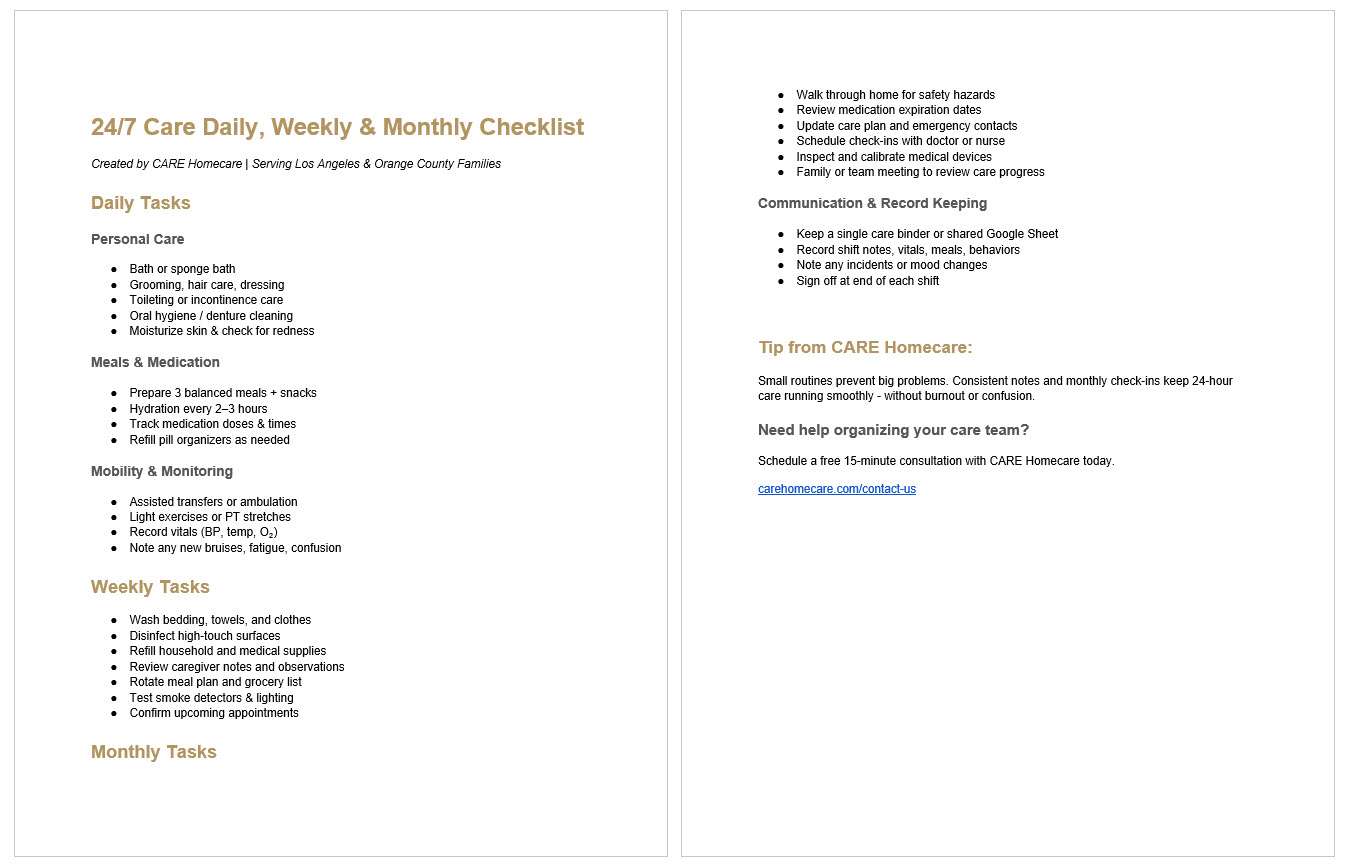
Download or Print the 24/7 Home Care Checklist
Download our Daily, Weekly, and Monthly Care Checklist (PDF) to stay organized and avoid burnout. It’s designed for both family caregivers and professional aides managing 24-hour schedules.
It’s available in PDF as well as in Word Doc format for those who’d like to download and edit.
Caregiver Burnout Self-Check Worksheet, A Quick Reset When 24/7 Care Starts Feeling Heavy
If you’re using this 24/7 care checklist and still feeling stretched thin, that’s not a personal failure. It’s a signal the load may be too heavy for one person or one routine. We created a free printable Caregiver Burnout Self-Check Worksheet to help you spot early warning signs, name what’s driving the stress (including guilt and resentment), and choose one realistic next step that lowers pressure this week. You can print it or fill it out digitally, it also comes in an editable Word version if you want to customize it for your family or care team.
Caring around the clock doesn’t have to feel chaotic
When your loved one requires 24-hour care, it can feel like the world suddenly runs on alarms, pillboxes, and endless to-do lists. But with a clear routine, even complex care schedules become manageable.
Whether you’re overseeing a professional care team or sharing shifts among family, this guide helps you stay organized, reduce burnout, and prevent small issues from turning into emergencies.
If you’re still deciding what kind of round-the-clock help you need, start here: 24-Hour Care vs Live-In Care.
24/7 Home Care Support Across Los Angeles and Orange County by CARE Homecare
A checklist is just the first step. Having reliable support at home makes all the difference. CARE Homecare provides flexible hourly and 24-hour in-home care throughout Los Angeles and Orange County, ensuring safety, comfort, and consistency from the very first day home.
Our caregivers assist with daily routines, safe mobility, meal preparation, medication reminders, companionship, and home safety so families can feel confident their loved one is cared for around the clock.
Daily 24/7 Care Tasks
These are the foundation of every safe, comfortable day. Keep them consistent and documented for smooth handoffs between caregivers.
Personal care and hygiene
- Bathing or sponge baths each morning or evening
- Grooming, hair care, and dressing assistance
- Toileting and incontinence management
- Brushing teeth or cleaning dentures
- Moisturizing skin, checking for redness or pressure sores
Meals and medication
- Prepare nutritious meals with hydration reminders every 2–3 hours
- Follow any prescribed dietary restrictions (low sodium, diabetic-friendly, etc.)
- Track medication times and doses in a shared log
- Restock pill organizers weekly
Mobility, exercise, and monitoring
- Help with safe transfers from bed to chair
- Encourage light movement or prescribed physical therapy exercises
- Record vitals once or twice daily (blood pressure, oxygen, temperature)
- Watch for signs of fatigue, dizziness, or swelling
Tip:
Divide duties by shift. If you’re new to structuring care responsibilities, see What Do Home Care Providers Do for a full breakdown of caregiver roles.
Weekly 24/7 Care Tasks
Weekly routines keep the home environment clean, safe, and emotionally uplifting.
- Deep clean bathrooms, kitchen counters, and touch surfaces
- Wash bedding, towels, and frequently used clothing
- Review caregiver notes to spot behavioral or physical changes early
- Rotate meals to prevent appetite fatigue
- Refill supplies (gloves, wipes, incontinence pads, skincare, cleaning products)
- Test smoke detectors and change night-light bulbs if needed
- Update grocery or pharmacy subscriptions
Local Tip:
In Los Angeles County, you can schedule standing grocery or medication deliveries through services like Ralphs Delivery or CVS CarePass – ideal for households with rotating caregivers or limited transportation.
Monthly 24/7 Care Tasks
Monthly reviews ensure long-term safety and consistency as needs change.
- Walk through the home for new safety hazards (loose cords, uneven rugs, dim lighting)
- Review emergency contacts, DNR orders, and power-of-attorney documents
- Check expiration dates on medication and food
- Calibrate blood pressure cuffs, glucose monitors, and oxygen concentrators
- Schedule medical appointments or telehealth check-ins
- Hold a 15-minute “care team meeting” with family and caregivers to discuss progress, challenges, and any adjustments needed
Tip:
Many LA and Orange County families request a monthly “care audit” visit through their home care agency. These short visits can identify potential issues early – before they lead to hospital readmission.
Organizing Communication Between Caregivers
Consistent documentation is the backbone of successful 24-hour care.
Create a simple binder or shared digital sheet (Google Sheets or CareSmart app) with sections for:
- Daily vitals
- Meals and hydration logs
- Medication administration
- Mood or behavior observations
- Shift notes and handoffs
Encourage caregivers to use short, factual notes (“Refused breakfast,” “Slept poorly 2–5 a.m.”) rather than long narratives. This keeps information actionable and easy to scan.
When to Reassess 24-Hour Care Needs
Your loved one’s needs will evolve – sometimes suddenly.
- Revisit the care plan when you notice:
- Increased falls, confusion, or agitation
- More medical appointments or new medications
- Caregiver fatigue or inconsistent routines
- Night-time wandering or sundowning behavior
Early adjustments keep your care plan sustainable and your loved one safe.
Frequently Asked Questions about 24-Hour Home Care
What’s included in 24-hour home care?
24-hour home care includes continuous support split into day and night shifts. Caregivers assist with bathing, grooming, toileting, mobility, medication reminders, meal preparation, companionship, and monitoring for safety concerns. For complex needs, agencies may rotate multiple trained caregivers to prevent fatigue and ensure consistent care quality.
How do I organize caregiver shifts for 24/7 coverage?
Most families use two 12-hour caregivers or three 8-hour shifts for 24-hour coverage. Keep a shared log for vitals, meals, and medications to ensure smooth handoffs between shifts. Some agencies also offer live-in caregivers who stay in the home and receive set rest breaks each day.
How often should 24-hour care plans be reviewed?
Care plans should be reviewed monthly, or sooner if your loved one experiences a fall, new medication, or hospital visit. Regular updates keep caregivers aligned and prevent gaps in care that could lead to health complications or readmission.
When You Need Help Beyond the Checklist
You don’t have to manage 24-hour care alone.
At CARE Homecare, we specialize in continuous care for seniors and those recovering from surgery or managing chronic illness across Los Angeles and Orange County.
We’ll help you:
- Build a shift rotation that actually works
- Train caregivers on your loved one’s specific needs
- Review safety and comfort every month
Book a free 15-minute care consultation to receive a personalized 24/7 care plan and checklist tailored to your home.

 https://carehomecare.com/wp-content/uploads/2026/05/Post-Surgery-Home-Care-Checklist-Non-Medical-Support-for-Recovery-at-Home-Free-PDF-and-Word-Download.jpg
839
1315
Moti Gamburd
https://a81019caredemo.wpengine.com/wp-content/uploads/2019/08/CARE-Homecare-Logo-wht.png
Moti Gamburd2026-05-14 20:03:392026-05-14 20:03:39Free Post-Surgery Home Care Checklist | Non-Medical Support for Recovery at Home | PDF or Word Print or Download
https://carehomecare.com/wp-content/uploads/2026/05/Post-Surgery-Home-Care-Checklist-Non-Medical-Support-for-Recovery-at-Home-Free-PDF-and-Word-Download.jpg
839
1315
Moti Gamburd
https://a81019caredemo.wpengine.com/wp-content/uploads/2019/08/CARE-Homecare-Logo-wht.png
Moti Gamburd2026-05-14 20:03:392026-05-14 20:03:39Free Post-Surgery Home Care Checklist | Non-Medical Support for Recovery at Home | PDF or Word Print or Download https://carehomecare.com/wp-content/uploads/2026/05/Home-Care-Supplies-Preparation-Checklist.jpg
842
1316
Moti Gamburd
https://a81019caredemo.wpengine.com/wp-content/uploads/2019/08/CARE-Homecare-Logo-wht.png
Moti Gamburd2026-05-14 18:49:452026-05-14 18:49:45Home Care Supplies Checklist | What to Have Ready Before Care Starts | Free Printable PDF
https://carehomecare.com/wp-content/uploads/2026/05/Home-Care-Supplies-Preparation-Checklist.jpg
842
1316
Moti Gamburd
https://a81019caredemo.wpengine.com/wp-content/uploads/2019/08/CARE-Homecare-Logo-wht.png
Moti Gamburd2026-05-14 18:49:452026-05-14 18:49:45Home Care Supplies Checklist | What to Have Ready Before Care Starts | Free Printable PDF https://carehomecare.com/wp-content/uploads/2026/05/Light-Housekeeping-Checklist-for-Home-Caregivers-1.jpg
832
1080
Moti Gamburd
https://a81019caredemo.wpengine.com/wp-content/uploads/2019/08/CARE-Homecare-Logo-wht.png
Moti Gamburd2026-05-13 11:11:172026-05-14 02:13:21Light Housekeeping Checklist for Home Caregivers | Free Printable PDF
https://carehomecare.com/wp-content/uploads/2026/05/Light-Housekeeping-Checklist-for-Home-Caregivers-1.jpg
832
1080
Moti Gamburd
https://a81019caredemo.wpengine.com/wp-content/uploads/2019/08/CARE-Homecare-Logo-wht.png
Moti Gamburd2026-05-13 11:11:172026-05-14 02:13:21Light Housekeeping Checklist for Home Caregivers | Free Printable PDF https://carehomecare.com/wp-content/uploads/2026/05/Home-Safety-Checklist-for-Seniors-Free-Printable-Room-by-Room-Guide-PDF-Download.jpg
804
1042
Moti Gamburd
https://a81019caredemo.wpengine.com/wp-content/uploads/2019/08/CARE-Homecare-Logo-wht.png
Moti Gamburd2026-05-12 01:27:302026-05-13 02:09:16Home Safety Checklist for Seniors | Room by Room (Free Printable PDF)
https://carehomecare.com/wp-content/uploads/2026/05/Home-Safety-Checklist-for-Seniors-Free-Printable-Room-by-Room-Guide-PDF-Download.jpg
804
1042
Moti Gamburd
https://a81019caredemo.wpengine.com/wp-content/uploads/2019/08/CARE-Homecare-Logo-wht.png
Moti Gamburd2026-05-12 01:27:302026-05-13 02:09:16Home Safety Checklist for Seniors | Room by Room (Free Printable PDF) https://carehomecare.com/wp-content/uploads/2026/05/In-Home-Care-Agency-Checklist-Questions-to-Ask-Before-You-Hire.jpg
831
1078
Moti Gamburd
https://a81019caredemo.wpengine.com/wp-content/uploads/2019/08/CARE-Homecare-Logo-wht.png
Moti Gamburd2026-05-04 01:29:142026-05-13 02:07:13In-Home Care Agency Checklist | Questions to Ask Before You Hire
https://carehomecare.com/wp-content/uploads/2026/05/In-Home-Care-Agency-Checklist-Questions-to-Ask-Before-You-Hire.jpg
831
1078
Moti Gamburd
https://a81019caredemo.wpengine.com/wp-content/uploads/2019/08/CARE-Homecare-Logo-wht.png
Moti Gamburd2026-05-04 01:29:142026-05-13 02:07:13In-Home Care Agency Checklist | Questions to Ask Before You Hire https://carehomecare.com/wp-content/uploads/2026/05/Dementia-Daily-Caregiver-Checklist-Free-Printable-PDF-for-Home-Care.jpg
831
1078
Moti Gamburd
https://a81019caredemo.wpengine.com/wp-content/uploads/2019/08/CARE-Homecare-Logo-wht.png
Moti Gamburd2026-05-03 00:17:592026-05-13 02:09:49Dementia Daily Caregiver Checklist | Free Printable PDF for Home Care
https://carehomecare.com/wp-content/uploads/2026/05/Dementia-Daily-Caregiver-Checklist-Free-Printable-PDF-for-Home-Care.jpg
831
1078
Moti Gamburd
https://a81019caredemo.wpengine.com/wp-content/uploads/2019/08/CARE-Homecare-Logo-wht.png
Moti Gamburd2026-05-03 00:17:592026-05-13 02:09:49Dementia Daily Caregiver Checklist | Free Printable PDF for Home Care https://carehomecare.com/wp-content/uploads/2026/05/ADL-IADL-Checklist-for-Seniors-Free-Printable-Assessment-PDF-Download.jpg
795
1041
Moti Gamburd
https://a81019caredemo.wpengine.com/wp-content/uploads/2019/08/CARE-Homecare-Logo-wht.png
Moti Gamburd2026-05-01 17:41:202026-05-13 02:10:25ADL / IADL Checklist for Seniors - Free Printable Assessment (PDF Download)
https://carehomecare.com/wp-content/uploads/2026/05/ADL-IADL-Checklist-for-Seniors-Free-Printable-Assessment-PDF-Download.jpg
795
1041
Moti Gamburd
https://a81019caredemo.wpengine.com/wp-content/uploads/2019/08/CARE-Homecare-Logo-wht.png
Moti Gamburd2026-05-01 17:41:202026-05-13 02:10:25ADL / IADL Checklist for Seniors - Free Printable Assessment (PDF Download) https://carehomecare.com/wp-content/uploads/2026/05/Free-Printable-Caregiver-Daily-Checklist-for-Elderly-PDF-Download.jpg
877
1352
Moti Gamburd
https://a81019caredemo.wpengine.com/wp-content/uploads/2019/08/CARE-Homecare-Logo-wht.png
Moti Gamburd2026-04-21 16:12:122026-05-14 02:01:30Free Printable Caregiver Daily Checklist for Elderly (PDF Download)
https://carehomecare.com/wp-content/uploads/2026/05/Free-Printable-Caregiver-Daily-Checklist-for-Elderly-PDF-Download.jpg
877
1352
Moti Gamburd
https://a81019caredemo.wpengine.com/wp-content/uploads/2019/08/CARE-Homecare-Logo-wht.png
Moti Gamburd2026-04-21 16:12:122026-05-14 02:01:30Free Printable Caregiver Daily Checklist for Elderly (PDF Download) https://carehomecare.com/wp-content/uploads/2026/03/24-7-vs-12-Hour-Shifts-for-Home-Care.jpg
1706
2553
Mendy Perlman
https://a81019caredemo.wpengine.com/wp-content/uploads/2019/08/CARE-Homecare-Logo-wht.png
Mendy Perlman2026-03-14 03:46:542026-03-15 03:52:2924/7 vs 12-Hour Shifts for Home Care - Coverage Models to Compare
https://carehomecare.com/wp-content/uploads/2026/03/24-7-vs-12-Hour-Shifts-for-Home-Care.jpg
1706
2553
Mendy Perlman
https://a81019caredemo.wpengine.com/wp-content/uploads/2019/08/CARE-Homecare-Logo-wht.png
Mendy Perlman2026-03-14 03:46:542026-03-15 03:52:2924/7 vs 12-Hour Shifts for Home Care - Coverage Models to Compare
