
Contents
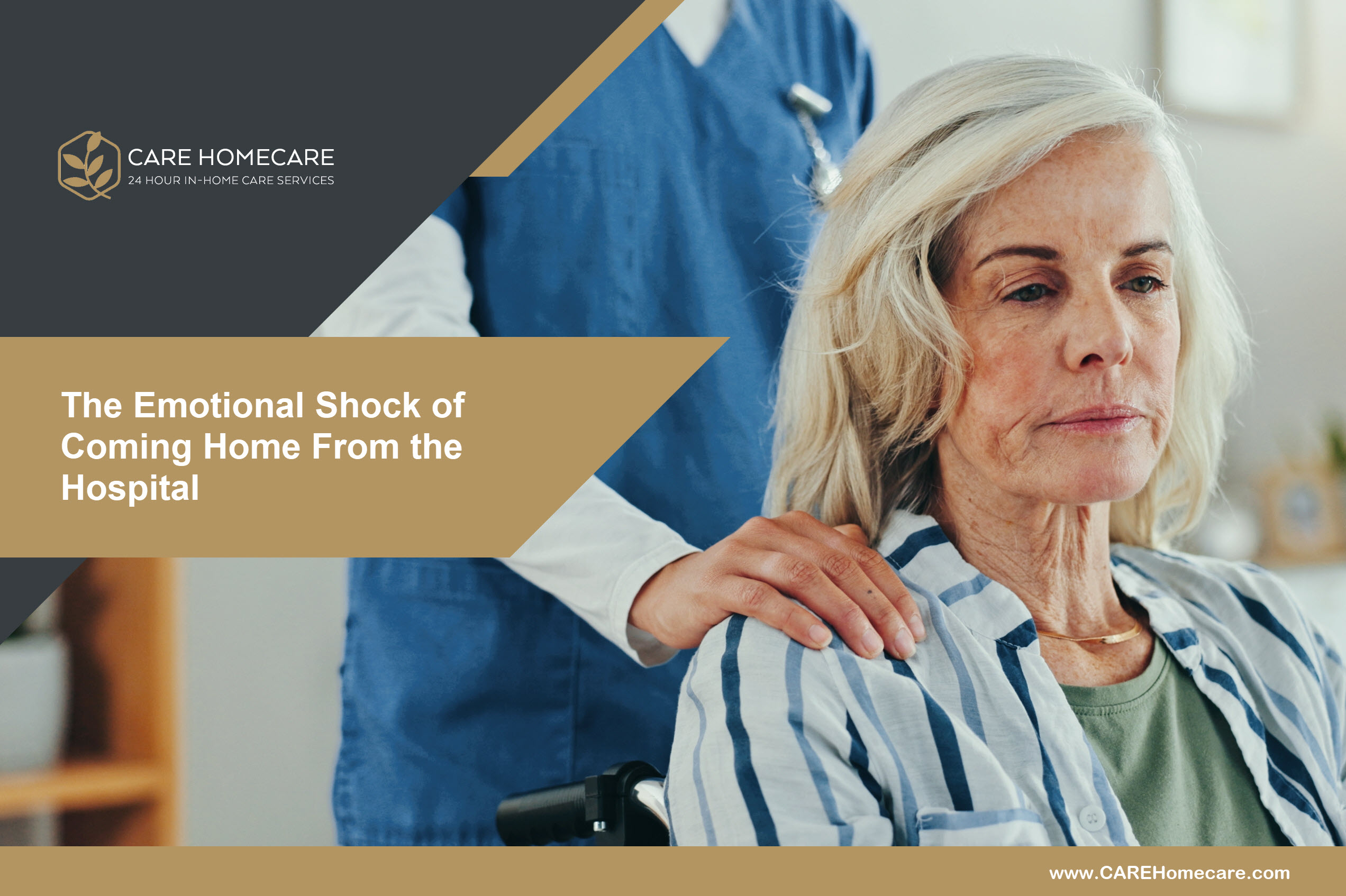
The Emotional Shock of Coming Home From the Hospital
Key Takeaways
- Emotional shock after discharge is common because families lose the constant support of hospital staff
- Patients often feel vulnerable, anxious or isolated in the first days at home
- Families experience stress from new caregiving responsibilities and fear of missing red flags
- Professional caregivers provide stability, structure and reassurance that reduce anxiety
- Services such as 24 hour home care and dementia care address the highest-risk situations
- Local support in Los Angeles and Orange County ensures practical challenges like transportation are solved
Home Care Support Services Across Los Angeles and Orange County by CARE Homecare
Coming home from the hospital can feel overwhelming, but your family doesn’t have to face it alone. CARE Homecare offers flexible hourly and 24-hour in-home care across Los Angeles and Orange Counties.
Our compassionate caregivers bring stability, reassurance and hands-on support with daily routines, safe mobility, meal preparation, companionship and home safety so recovery feels less stressful and more secure from the very first night home.
The unseen challenge of hospital discharge
For many families, the day of discharge is celebrated as a milestone. It represents progress, healing and relief. Yet what often follows is an unexpected emotional shock (See Hospital Discharge Checklist). Patients and loved ones move from an environment of constant medical supervision to the quiet of their own home. The contrast can be jarring. Instead of nurses checking vitals at all hours, there is silence. Instead of immediate answers to questions, there is uncertainty.
As experts in home care services, we see this emotional shock frequently. Families expect recovery to feel smooth once they are home. In reality, the first days and weeks often bring anxiety, fear of relapse and a sense of being abandoned after the safety net of hospital care disappears. This transition is as much emotional as it is physical. Recognizing and addressing these feelings is essential for a safe and confident recovery.
For patients or families facing hospital discharge, we put together a guide that provides insight into the entire hospital discharge process as well as how to transition to in-home care after hospital discharge: A Family Guide to Home Care After Hospital Discharge
Why emotional shock happens after discharge
Hospitals provide structure. There is a daily routine of meals, medication, therapy and check-ins. Patients do not have to think about what comes next. Once home, that structure collapses. Families suddenly become responsible for scheduling medications, preparing meals and monitoring for complications.
The sudden absence of professional oversight creates feelings of vulnerability.
Emotional shock is not weakness. It is a natural response to a sudden shift in responsibility and environment. By understanding why it happens, families can plan for support that makes the transition less overwhelming.
The impact on patients
Patients often leave the hospital feeling hopeful but physically fragile. Weakness, pain or lingering symptoms heighten anxiety. The absence of constant medical monitoring creates fear that something will go wrong and no one will notice.
Many older adults struggle with sleep disruption, confusion or disorientation in the first days at home. This can create agitation or withdrawal. For those with dementia, the hospital-to-home shift may worsen confusion or increase nighttime restlessness.
Feelings of isolation also surface. In the hospital, there is activity, staff interaction and reassurance. At home, the quiet can feel lonely. Patients may wonder if their families are equipped to manage their needs.
The impact on families
Families often underestimate how draining hospital discharge can be. While they are relieved to bring their loved one home, they quickly feel the pressure of new responsibilities. They may worry about giving medications at the right times, providing the right meals or spotting signs of complications.
Anxiety grows at night. Without nurses nearby, families often feel compelled to stay awake, checking for changes in breathing or signs of pain. Sleep deprivation adds to stress.
This emotional strain can lead to burnout, especially when combined with jobs, childcare or other commitments. Many families report that the first week at home feels harder than the hospital stay itself because the support network is gone.
How professional caregivers bridge the gap
The emotional shock of discharge does not need to be faced alone. Professional home caregivers bring stability and reassurance to this fragile period. Their role goes beyond practical help. They provide the structure and confidence that families miss after leaving the hospital.
At CARE Homecare, even prior to hospital discharge, we begin with a written plan for the first 72 hours and first two weeks at home. This plan organizes medications, meals, hydration, mobility and rest. It mirrors the structured environment of the hospital while adapting to the comfort of home. Families feel less overwhelmed because they know what to expect.
Caregivers also provide real-time reassurance. Instead of worrying about whether pain levels are normal or if a wound looks concerning, families have an expert to guide them. This reduces fear of making mistakes and builds confidence.
Rebuilding routines and stability
One of the most powerful tools for easing emotional shock is restoring routine. Hospital life is built on predictable schedules. Replicating this at home helps patients and families adjust.
Professional caregivers anchor daily activities to familiar times. Medications align with meals. Walks or mobility exercises are set for the same hours each day. Bedtime routines are consistent. This repetition reduces uncertainty and restores a sense of control.
Our 24 hour home care services, available in Los Angeles and Orange County, is particularly valuable when families need around-the-clock reassurance. Having someone present at all times prevents sleepless nights for families and provides patients with continuous emotional support.
Emotional reassurance through companionship
Recovery is not only about physical healing. Companionship plays a vital role in reducing emotional distress. Patients often feel more confident and calm when they are not alone.
At CARE Homecare, our companionship and social engagement services help patients feel connected. Caregivers engage in conversation, listen to concerns and provide company during long days or nights. This interaction reduces loneliness and helps prevent depression, which is common after hospitalization.
Families also benefit emotionally. Knowing a trained professional is present allows them to focus on rest and personal responsibilities without constant worry.
The role of specialized dementia support
For patients with dementia, emotional shock after hospitalization is often magnified. The sudden change in environment and routine worsens disorientation. Families may see new agitation, wandering or resistance to care.
Our expert Alzheimer’s and dementia care, available in Los Angeles and Orange County, is designed to address these challenges. Caregivers use structured activities, calming routines and familiarity to reduce confusion. This not only stabilizes the patient but also reassures families who might otherwise feel helpless.
Reducing fear of complications
Much of the emotional shock comes from fear of missing signs of trouble. Families worry they will overlook a symptom and delay treatment.
Professional caregivers are trained to observe changes and escalate concerns. They track pain, appetite, mobility and wound appearance. They know when a call to the physician is needed. This vigilance provides peace of mind for families and prevents avoidable readmissions.
Licensed home health providers, such as visiting nurses or therapists, may also be part of the recovery process. CARE Homecare does not provide medical care but we complement clinical services by supporting the daily routines that keep recovery stable. For clarity, see our guide on home care vs home health care.
Local challenges in Los Angeles and Orange County
Geography adds another layer to emotional stress. In Los Angeles and Orange County, traffic and distance make follow up visits more stressful. Families often dread coordinating transportation while also managing recovery at home.
This is where early planning with a local provider matters. CARE Homecare offers transportation assistance so families do not carry that burden alone. By ensuring reliable access to follow up visits and therapy, we reduce the stress that comes from logistical barriers.
Evidence-based support for emotional recovery
The emotional challenges of hospital discharge are well documented. Research published by the Agency for Healthcare Research and Quality emphasizes the role of caregiver involvement in reducing stress and preventing readmission. Structured discharge planning, consistent follow up and early emotional support are all linked to better outcomes (AHRQ Discharge Planning Guidelines).
By aligning with these best practices, CARE Homecare delivers home care support that is both compassionate and evidence-based.
Contact CARE Homecare Today
Coming home after hospitalization should feel like a step forward, not a step into uncertainty. If your family is facing the emotional shock of discharge, CARE Homecare can help. Our expert caregivers provide stability, reassurance and a structured plan that eases the transition. From companionship to 24 hour home care, we deliver the support your family needs to recover with confidence.
Contact CARE Homecare today to schedule a consultation and create a care plan that brings peace of mind from the very first night at home.
Our Los Angeles Headquarters: 1156 North Gardner Street, West Hollywood, CA 90046
Telephone: (323) 851-1422
Email: info@carehomecare.com

 https://carehomecare.com/wp-content/uploads/2026/05/Post-Surgery-Home-Care-Checklist-Non-Medical-Support-for-Recovery-at-Home-Free-PDF-and-Word-Download.jpg
839
1315
Moti Gamburd
https://a81019caredemo.wpengine.com/wp-content/uploads/2019/08/CARE-Homecare-Logo-wht.png
Moti Gamburd2026-05-14 20:03:392026-05-14 20:03:39Free Post-Surgery Home Care Checklist | Non-Medical Support for Recovery at Home | PDF or Word Print or Download
https://carehomecare.com/wp-content/uploads/2026/05/Post-Surgery-Home-Care-Checklist-Non-Medical-Support-for-Recovery-at-Home-Free-PDF-and-Word-Download.jpg
839
1315
Moti Gamburd
https://a81019caredemo.wpengine.com/wp-content/uploads/2019/08/CARE-Homecare-Logo-wht.png
Moti Gamburd2026-05-14 20:03:392026-05-14 20:03:39Free Post-Surgery Home Care Checklist | Non-Medical Support for Recovery at Home | PDF or Word Print or Download https://carehomecare.com/wp-content/uploads/2026/05/Home-Care-Supplies-Preparation-Checklist.jpg
842
1316
Moti Gamburd
https://a81019caredemo.wpengine.com/wp-content/uploads/2019/08/CARE-Homecare-Logo-wht.png
Moti Gamburd2026-05-14 18:49:452026-05-14 18:49:45Home Care Supplies Checklist | What to Have Ready Before Care Starts | Free Printable PDF
https://carehomecare.com/wp-content/uploads/2026/05/Home-Care-Supplies-Preparation-Checklist.jpg
842
1316
Moti Gamburd
https://a81019caredemo.wpengine.com/wp-content/uploads/2019/08/CARE-Homecare-Logo-wht.png
Moti Gamburd2026-05-14 18:49:452026-05-14 18:49:45Home Care Supplies Checklist | What to Have Ready Before Care Starts | Free Printable PDF https://carehomecare.com/wp-content/uploads/2026/05/Light-Housekeeping-Checklist-for-Home-Caregivers-1.jpg
832
1080
Moti Gamburd
https://a81019caredemo.wpengine.com/wp-content/uploads/2019/08/CARE-Homecare-Logo-wht.png
Moti Gamburd2026-05-13 11:11:172026-05-14 02:13:21Light Housekeeping Checklist for Home Caregivers | Free Printable PDF
https://carehomecare.com/wp-content/uploads/2026/05/Light-Housekeeping-Checklist-for-Home-Caregivers-1.jpg
832
1080
Moti Gamburd
https://a81019caredemo.wpengine.com/wp-content/uploads/2019/08/CARE-Homecare-Logo-wht.png
Moti Gamburd2026-05-13 11:11:172026-05-14 02:13:21Light Housekeeping Checklist for Home Caregivers | Free Printable PDF https://carehomecare.com/wp-content/uploads/2026/05/Home-Safety-Checklist-for-Seniors-Free-Printable-Room-by-Room-Guide-PDF-Download.jpg
804
1042
Moti Gamburd
https://a81019caredemo.wpengine.com/wp-content/uploads/2019/08/CARE-Homecare-Logo-wht.png
Moti Gamburd2026-05-12 01:27:302026-05-13 02:09:16Home Safety Checklist for Seniors | Room by Room (Free Printable PDF)
https://carehomecare.com/wp-content/uploads/2026/05/Home-Safety-Checklist-for-Seniors-Free-Printable-Room-by-Room-Guide-PDF-Download.jpg
804
1042
Moti Gamburd
https://a81019caredemo.wpengine.com/wp-content/uploads/2019/08/CARE-Homecare-Logo-wht.png
Moti Gamburd2026-05-12 01:27:302026-05-13 02:09:16Home Safety Checklist for Seniors | Room by Room (Free Printable PDF) https://carehomecare.com/wp-content/uploads/2026/05/In-Home-Care-Agency-Checklist-Questions-to-Ask-Before-You-Hire.jpg
831
1078
Moti Gamburd
https://a81019caredemo.wpengine.com/wp-content/uploads/2019/08/CARE-Homecare-Logo-wht.png
Moti Gamburd2026-05-04 01:29:142026-05-13 02:07:13In-Home Care Agency Checklist | Questions to Ask Before You Hire
https://carehomecare.com/wp-content/uploads/2026/05/In-Home-Care-Agency-Checklist-Questions-to-Ask-Before-You-Hire.jpg
831
1078
Moti Gamburd
https://a81019caredemo.wpengine.com/wp-content/uploads/2019/08/CARE-Homecare-Logo-wht.png
Moti Gamburd2026-05-04 01:29:142026-05-13 02:07:13In-Home Care Agency Checklist | Questions to Ask Before You Hire https://carehomecare.com/wp-content/uploads/2026/05/Dementia-Daily-Caregiver-Checklist-Free-Printable-PDF-for-Home-Care.jpg
831
1078
Moti Gamburd
https://a81019caredemo.wpengine.com/wp-content/uploads/2019/08/CARE-Homecare-Logo-wht.png
Moti Gamburd2026-05-03 00:17:592026-05-13 02:09:49Dementia Daily Caregiver Checklist | Free Printable PDF for Home Care
https://carehomecare.com/wp-content/uploads/2026/05/Dementia-Daily-Caregiver-Checklist-Free-Printable-PDF-for-Home-Care.jpg
831
1078
Moti Gamburd
https://a81019caredemo.wpengine.com/wp-content/uploads/2019/08/CARE-Homecare-Logo-wht.png
Moti Gamburd2026-05-03 00:17:592026-05-13 02:09:49Dementia Daily Caregiver Checklist | Free Printable PDF for Home Care https://carehomecare.com/wp-content/uploads/2026/05/ADL-IADL-Checklist-for-Seniors-Free-Printable-Assessment-PDF-Download.jpg
795
1041
Moti Gamburd
https://a81019caredemo.wpengine.com/wp-content/uploads/2019/08/CARE-Homecare-Logo-wht.png
Moti Gamburd2026-05-01 17:41:202026-05-13 02:10:25ADL / IADL Checklist for Seniors - Free Printable Assessment (PDF Download)
https://carehomecare.com/wp-content/uploads/2026/05/ADL-IADL-Checklist-for-Seniors-Free-Printable-Assessment-PDF-Download.jpg
795
1041
Moti Gamburd
https://a81019caredemo.wpengine.com/wp-content/uploads/2019/08/CARE-Homecare-Logo-wht.png
Moti Gamburd2026-05-01 17:41:202026-05-13 02:10:25ADL / IADL Checklist for Seniors - Free Printable Assessment (PDF Download) https://carehomecare.com/wp-content/uploads/2026/05/Free-Printable-Caregiver-Daily-Checklist-for-Elderly-PDF-Download.jpg
877
1352
Moti Gamburd
https://a81019caredemo.wpengine.com/wp-content/uploads/2019/08/CARE-Homecare-Logo-wht.png
Moti Gamburd2026-04-21 16:12:122026-05-14 02:01:30Free Printable Caregiver Daily Checklist for Elderly (PDF Download)
https://carehomecare.com/wp-content/uploads/2026/05/Free-Printable-Caregiver-Daily-Checklist-for-Elderly-PDF-Download.jpg
877
1352
Moti Gamburd
https://a81019caredemo.wpengine.com/wp-content/uploads/2019/08/CARE-Homecare-Logo-wht.png
Moti Gamburd2026-04-21 16:12:122026-05-14 02:01:30Free Printable Caregiver Daily Checklist for Elderly (PDF Download) https://carehomecare.com/wp-content/uploads/2026/03/24-7-vs-12-Hour-Shifts-for-Home-Care.jpg
1706
2553
Mendy Perlman
https://a81019caredemo.wpengine.com/wp-content/uploads/2019/08/CARE-Homecare-Logo-wht.png
Mendy Perlman2026-03-14 03:46:542026-03-15 03:52:2924/7 vs 12-Hour Shifts for Home Care - Coverage Models to Compare
https://carehomecare.com/wp-content/uploads/2026/03/24-7-vs-12-Hour-Shifts-for-Home-Care.jpg
1706
2553
Mendy Perlman
https://a81019caredemo.wpengine.com/wp-content/uploads/2019/08/CARE-Homecare-Logo-wht.png
Mendy Perlman2026-03-14 03:46:542026-03-15 03:52:2924/7 vs 12-Hour Shifts for Home Care - Coverage Models to Compare
